In an interview with CivicXI.com last week that you can see here, Honda Media Relations Manager Carl Pulley revealed that the manual transmission will live on in the next generation of the Honda Civic. Pulley confirmed that both the Civic Si and the Civic Type R will exclusively feature Honda’s legendary manual gearbox. Pulley also said that while the manual transmission will no longer be available in the sedan, buyers will still have the option to check the box for a manual in the five-door hatchback.
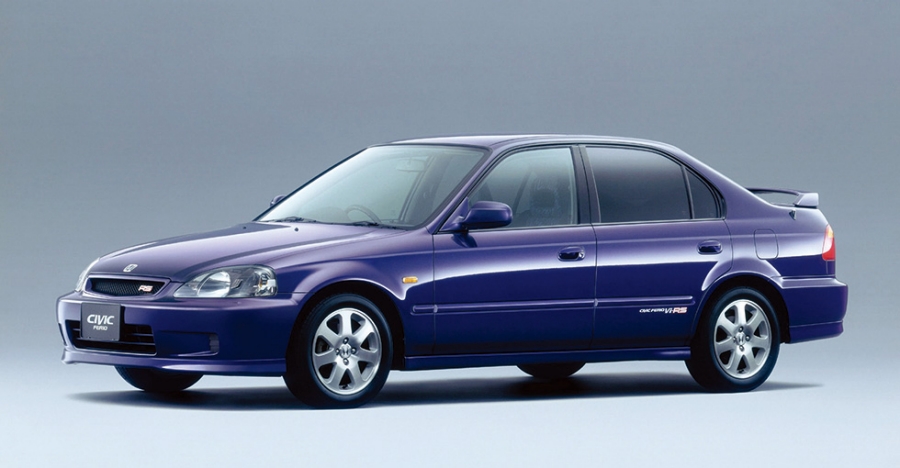
We here at TMGPS are obviously excited that Honda is continuing with its tradition in offering their performance line of Civics with no other option than a stick shift. Starting with the third generation of Civics, the Si variant hit the U.S. shores in November of 1984 with five-speeds commanding 91 horsepower from a 1.5 liter 12-valve SOHC engine. VTEC was introduced to the U.S. spec Sis in 1992 with the fifth generation Civic, again with five speeds and an increase of power to 125 horsepower from a 1.6-liter engine. The legendary 1999 Civic Si was and still is the Civic that most of us remember from our youth. The B16 VTEC 1.6 liter 4 cylinder sporting a 8200 RPM redline brought 160 horsepower to the five-speed manual. Iconic Electron Blue Pearl paint made for one of the most coveted front-drive performance cars of all time.
While Japan has enjoyed Type R variants of Hondas for decades, America only recently began to enjoy performance-focused Civic Type R in 2017. Whereas the Civic Si historically sports more luxurious amenities like a moonroof and a modest power increase over a regular Civic, the Type R in recent years has bet big on horsepower and suspension tweaks. The current Civic Si’s 205 horsepower is respectable; however, the Type R’s 306 horsepower makes it debatably one of the best front-drive track attack machines. The Civic Si features a snappy six-speed manual. The Civic Type R once again shows its racing roots, offering a shorter throw gear selector and automated rev matching for both upshifts and downshifts.
As of now, Honda has not released power numbers for the eleventh-generation Civic Si or Type R. Whether power numbers increase or stay put, it’s not too early to say that these two performance models will be Honda’s best efforts in the Civic range to date.
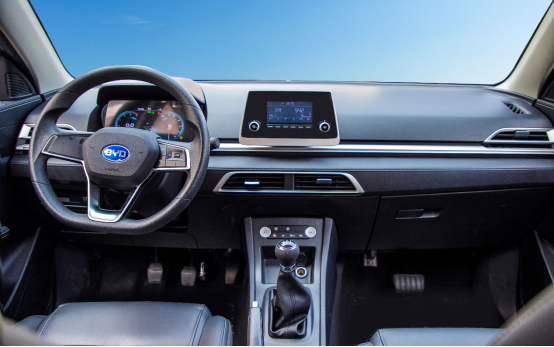
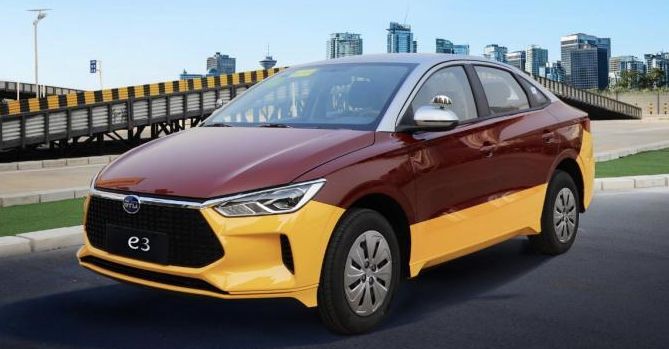
BYD E3 Driving School Package with clutch, shifter, and passenger side brake pedal.
Chinese Automaker BYD has recently developed a simulated manual transmission for electric vehicles specifically for driver training. I had overlooked this news initially, assuming it was no different from the BEV manual concepts we’ve commented on in the past. I failed to recognize that this was the first exclusively electric vehicle to add a manual transmission and that the inputs and feedback from the system are entirely simulated.
Unlike some of the other examples of manual transmissions in electric cars, where the electric motors output shaft is mated with a conventional clutch and manual gearbox, The BYD E3 clutch and shifter send instructions to the controller which presumably manipulates the speed and torque characteristics of the output in a way which mimics the dynamics of a gear change. I would also expect some sort of feedback in the clutch to simulate the feeling of a bite point. Chery had also developed a similar system for the same purpose with the eQ2, but in this case the vehicle had started as an ICE product that already offered a manual transmission, so the required parts were already existing and integrated.
As China’s massive growth of the middle class matures, its relatively new automotive industry and market are budding rapidly. It’s interesting to observe this from the context of our Western automotive landscape, where we collectively have a lot more direct experience with what some might soon be considered archaic technology. Without several decades of amassed used car inventory to satisfy growing waves of new drivers, the low-cost first-time buyers’ car in China is more likely to be a mini EV than a used Volkswagen. China’s undeniable pollution issues and their government’s ability to control and regulate the marketplace will presumably continue to push things in this direction quite forcefully.
With that backdrop, it is somewhat surprising to learn that there is adequate desire to acquire the skill of driving a manual transmission for two manufacturers to develop and produce simulated manual transmissions on electric cars specifically for the use of driver training. I assume that the primary motivation for acquiring the skill is for occupational purposes. It would be fascinating to find out if there is some level of enthusiasm among new drivers to think about driving more joyfully or recreationally. It’s hard to imagine this technology as a desirable feature outside training or finding its way to our shores. Still, as a driving enthusiast and manual fanatic, I’m glad it exists.
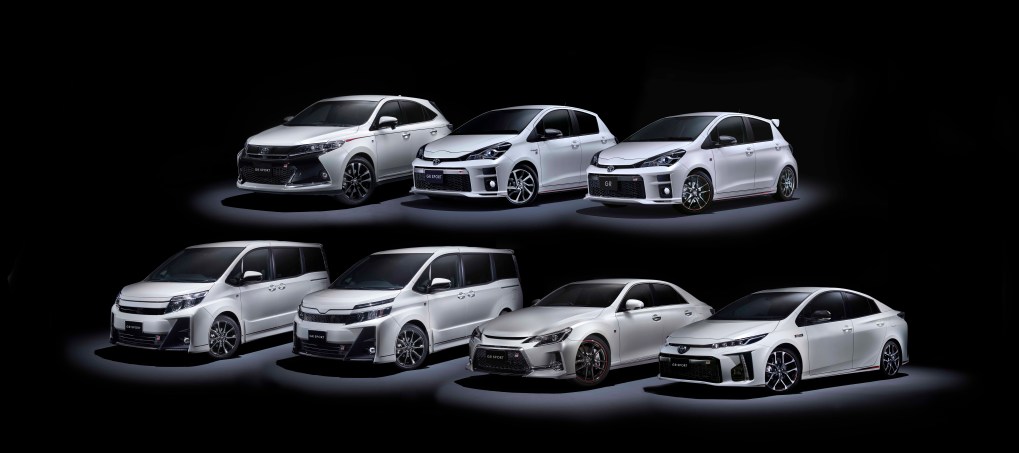
Rumors of a fire-breathing, manual transmission, all-wheel-drive Toyota GR Corolla Hatchback were reported by Car Sensor in Japan last week, brought stateside by James Gilboy at The Drive. Could we soon see a 297-horsepower turbocharged three-cylinder under the hood of the sporty-looking but mild-mannered Corolla on U.S. shores?
Rumor holds the GR Corolla could crib its engine, transmission and all-wheel-drive system from the internationally heralded GR Yaris. A highly capable Corolla being offered stateside might dull the pain of being snubbed from having the GR Yaris available to us, especially if the car receives a slight power bump over the Yaris as forecasted by Car Sensor.
The 306-horsepower Honda Civic Type R outmuscles the current GR’s powertrain. However, the front-drive Civic may be at a disadvantage when it comes to which wheels lay down power. Honda’s heritage lies in fast front-drive compacts; the GR Corolla pulls a page from Toyota’s all-wheel-drive history instead, reaching back to the sixth-generation E90 Corolla All-Trac. Car Sensor goes a step further to validate that historical connection, reporting that a separate GR Corolla Wagon is a distinct possibility, perhaps even with a hybrid system coupled to a slightly larger-displacement engine.
Let’s assume the GR Corolla Hatchback would share the same selectable drive modes available in the GR Yaris. The GR Yaris has an “advanced driving force system” utilizing an electronically controlled multi-plate clutch, which provides a certain amount of torque to the front and rear wheels based on the drive mode selected. In the normal driving setting, the engine’s torque is split conservatively with 60% in the front, and 40% in the rear. Once the selector is switched to sports mode, the GR Yaris switches to an aggressive 30% front, 70% rear split. Track mode divides the torque evenly with a 50/50 split. Torsen provides limited slip differentials in both the front and back of the GR Yaris, making the car ready for track events from rallycross to autocross.
TMGPS member Nathan Geer shared his thoughts on the GR Corolla’s potential: “I can’t wait for Toyota to release the details,” said Geer, the owner of a 2019 Corolla Hatchback finished in Blue Flame. “It should be the car that finally puts Toyota in the STi and Golf R playing field.”
The keen eyed among us seem to have a sixth sense. In the calmest of moments, in the company of people who can’t tell a Civic from a Corsica and don’t care, a distant glint catches our attention. It’s a shape we haven’t seen before — not on these shores, anyway — and our excited flailing disturbs the fleeting peace of our passengers. We’ve spotted a special car again. We ask to turn around.
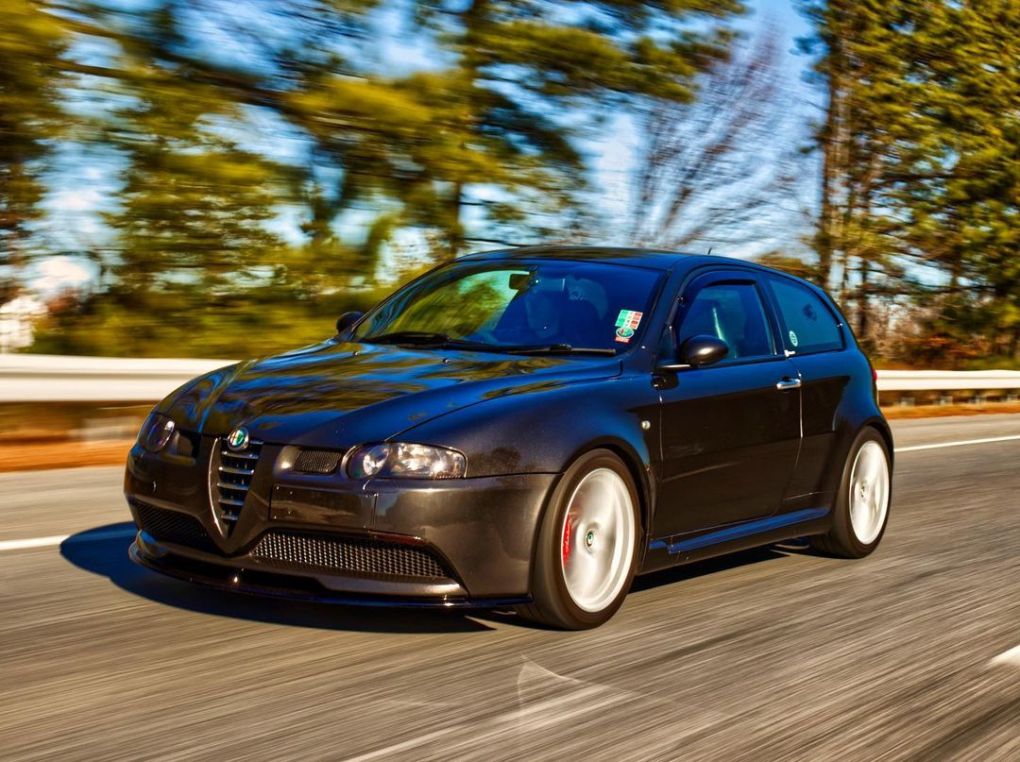
This particular find, though, is worth our passengers’ exasperation. It’s an Alfa Romeo 147 GTA, never sold in the USA, and rare even in Europe. James Lawson bought one of 5000 copies made — and when the British Royal Marines stationed him in the US, he brought his treasure with.
“Back in the UK, the car was registered as E11 GTA, and might well have been seen at numerous shows and events like Brooklands Auto Italia,” explained Lawson, who is no stranger to the racetrack. “It’s been out at Bedford Autodrome, Castle Coombe, Goodwood, Spa-Francorchamps and the Nürburgring. Alfie has probably done about 100 laps on the ‘Ring with only one minor suspension related mishap.”
Alfa Romeo fit some 147 GTA models with an automatic gearbox borrowed from the Ferrari 360 Modena. Most, Lawson said, came with the six-speed manual that he considers the superior experience. His particular example might be clean, but it’s not factory: its rebored “Busso” 3.8-liter V6 pumps out 330 horsepower, and a short-throw shifter reduced the gear throws by about a third.
The only known Alfa Romeo 147 GTA in the United States has a busy schedule over its two-year visit: Lawson plans to tackle the Tail of the Dragon between track days at Summit Point and Watkins Glen. Track prep includes KW V3 coilovers, Eibach anti-roll bars, a Q2 differential and “lots of extra Alcantara.”
A Ferrari 360 throttle body, ported CF2 manifolds and Raggazzon exhaust transform the 2900-pound hot hatch into an anthemic expression, instantly recognizable as foreign and exotic to American ears. As Lawson said, “Everything sounds better in Italian.”
If you’re an outspoken ally of the manual transmission active in your online owner community, DM @highmileage on Instagram for your chance to be featured in a TMGPS Member Spotlight.
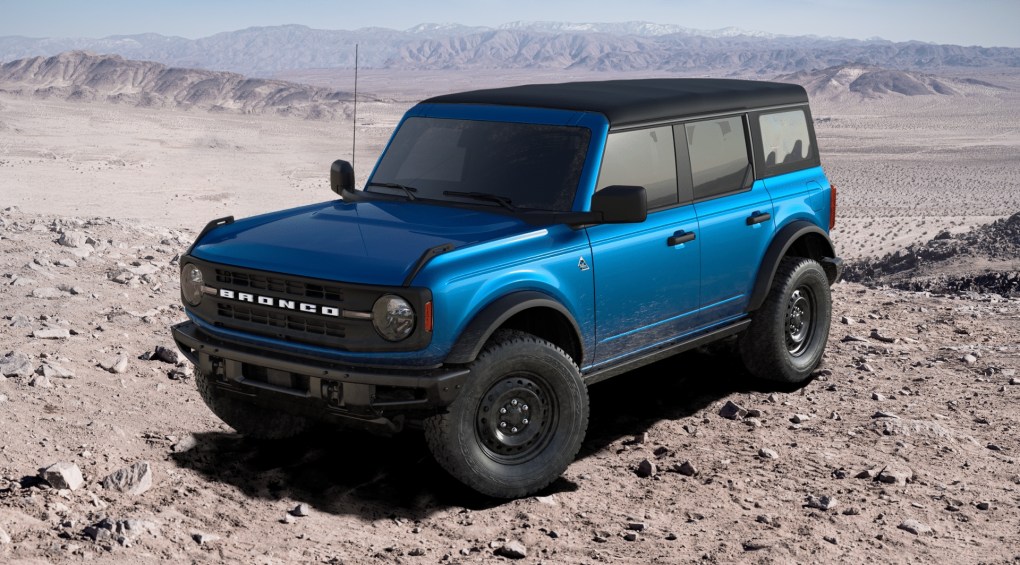
The Ford Bronco is quickly becoming a symbol of hope for stick shift enthusiasts. Out of 125,000 pre-orders, 22,500 will be delivered with a row-your-own box — an 18 percent take-rate for the seven-speed manual transmission.
Only the base 270-horsepower 2.3-liter turbocharged four cylinder engine can be paired with the manual transmission. While some may be disappointed the more powerful 310-horsepower 2.7L twin-turbo V6 isn’t available with a manual, it’s important to note that the turbo four is still more powerful than any available engine in any previous-generation Bronco.
The new Getrag 7MTI550 manual transmission operates like a normal six-speed during daily driving. The additional seventh speed is a dedicated off-road crawl gear, marked with a “C”, placed just below reverse on the left side. Crawl is an extremely low 6.588:1 ratio — for comparison, the Jeep Wrangler low gear is 5.13:1. The crawl gear is especially useful on steep rocky terrain and in vehicle recovery operations. To put it another way, the crawl gear will help you be the hero of the day as you pull a buddy’s Jeep out of a deep mud hole.
On the manual transmission Black Diamond trim, buyers are offered two different transfer case options. The standard part-time two-speed transfer case has three selectable drive modes: Two-Wheel High, Four-Wheel High and Four-Wheel Low. The optional Advanced 4×4 Automatic On-Demand Engagement transfer case adds a fourth drive mode called 4A, which continuously adjusts power to the front wheels based on current driving conditions. As in other Ford systems, 4A keeps the Bronco in rear-drive until slip is detected. Once slip occurs, a proportional amount of torque is sent to the front wheels to keep control. In my personal experience, I have found this mode quite useful on wet pavement in other Ford vehicles.
Also exclusive to manual Broncos are Hill Descent Control and Crank in Gear. Hill Descent Control utilizes anti-lock braking and traction control to manage wheel spin and maintain a constant speed while traveling downhill. Crank in Gear enables the driver to start the engine while in gear in order to execute more advanced off-road maneuvers such as a hill recovery technique.
There are so many different Bronco combinations that the only easy choice is picking the transmission. I would option my four-door Bronco Black Diamond in Velocity Blue with the seven-speed, steel wheels and the standard transfer case for the sake of tradition.
If the global microchip shortage does not hinder production, delivery of reserved Broncos is expected to start in June 2021.
Next time you roll up on a new Corolla, don’t forget that it could very well be a stick. In fact, it could be Nathan Geer.
“I found out about the car back in 2019, when the great Larry Chen released his Corolla Hatch at SEMA,” said Geer, who remembered the tuner concept’s fifteen52 wheels above all. “I’m 18, so I was looking for a car that would be reliable enough to get me to school and work and still be fun enough for me to get excited to drive it everyday.”
Nathan knew the Corolla Hatch was a match. He also knew his would have to be a manual — even though he had never driven stick.
“I bought the car without knowing how to drive manual, so my dad drove it home from the dealership,” said Geer, a mechanical engineering student in his freshman year who learned to drive manual transmission on his new car. “It truly made the driving experience raw.”
The E210-chassis Corolla is so new, aftermarket companies are still developing performance parts. Geer said the owner community is active and helpful; springs, intake and exhaust options are out there, but front lips and diffusers are the most popular mods. For now, the owner community is focused on aesthetics — and Geer’s Corolla had no problems attracting attention out of the box.
“I have always loved the color blue and was amazed by how Nitrous Blue looked on the Focus RS,” Geer said. “When the Hatch was released in Blue Flame, I knew that was the right color for me. The color definitely draws a lot of attention, especially mid-day when the sun hits it.”
Squint, and you’ll see more than a little DNA from Gazoo Racing’s hottest projects out of Europe and Japan. With bulging fenders and right-sized proportions, the Corolla Hatch is a convincing visual package missing just one finishing touch.
“I was looking for a cool-looking sticker that still gave a warning not to get all up on the car at stops,” said Geer, who discovered The Manual Gearbox Preservation Society through the Instagram Discover feed. “The simplistic design of the TMGPS decal was exactly what I was looking for.”
It feels like a lifetime ago that I was in Vegas chatting with Mark Allen, Jeep’s design shepherd (and my former boss), over some rye whiskey about the plausibility of an electric Wrangler which utilized traditional gearing and axles. It had been on my mind as the topic of manuals on electric cars comes up pretty frequently at TMGPS, and we had just seen the Ford/Webasto Mustang collaboration debut earlier that day at SEMA. Like most of my conversations with Mark, it was somewhat nerve-racking; either he’d dismiss the idea with stinging disapproval or he’d dismiss the idea with a mischievous grin, make a sarcastic joke, and change the subject. To my delight, and most likely thanks to the Manhattans, he was unusually receptive to the conversation. He told us about a friend of his who had built something along those lines and that it had worked fine. “You can start in 1st or you can start it in 4th, doesn’t matter! You don’t need the gears, but they’re there if you feel like going through them…” he said. I asked if there was any benefit to having the low range gearing when it came to crawling with a hypothetical electric Jeep. To which he responded with a shrug, and then changed the subject. I turned to my old pal Chris Piscitelli who had been responsible for the Moab Easter Jeep Safari builds for the past several years and asked what he thought about doing a build. “They don’t really let us do manuals anymore. A lot of the journalists don’t know how to drive them… besides, they’re moving me to Dodge when I get back.” EJS got canceled due to Covid-19 about six months after that conversation.
Many electric car experts will be quick to point out the on-demand torque of a BEV as a means for shedding the weight and complexity of a multi-ratio gearbox. As someone who loves driving manuals, but is also very interested in electric cars, the ultra-low ratios found in something like a Jeep Wrangler has always seemed like a great opportunity to experiment with the idea of slowing down typically high-RPM electric power with more traditional drivelines. The fact that Wrangler is also required to operate at highway speeds, and has limited space for batteries, means that there could also be a benefit to using the higher-end ratios to eke out some extra wheel speed from a motor that is turning at a lower RPM and potentially using less of the stored energy.
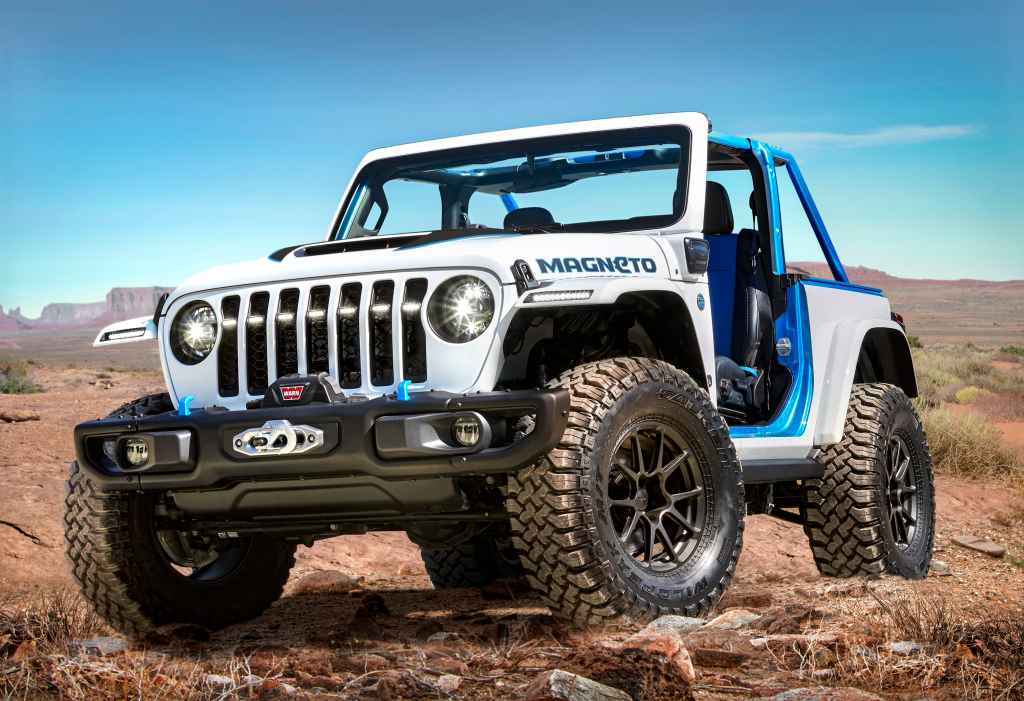
I was thrilled last night when I found out that the Jeep Magneto concept would in fact mate an electric motor to the stock JL 6-speed manual and drivelines! I have to say I’m a little salty we didn’t get a heads-up, and a chance to slap a TMGPS decal on it, but hopefully they’ll make it up to me with a chance to drive it one day. Until then, I can’t wait to find out how it does out on the trail and whether or not it’s an idea that makes sense for future production products.
Rather than crafting a homestyle copy pasta of the press release, I’m going to just let the fine folks at Jeep describe it in exactly the way they penned it.
“The Jeep Wrangler Magneto concept is a fully capable BEV that is stealthy, quiet, quick and an unmistakable rock-climbing force. Jeep brand engineers and designers have created a zero-emission vehicle with Jeep 4×4 capability that provides new levels of efficiency, environmental responsibility, and performance on- and off-road.
Based on a two-door 2020 Jeep Wrangler Rubicon, the Jeep Magneto uses a custom-built axial flux electric motor that operates up to 6,000 rpm. The e-motor is connected to a six-speed manual transmission, creating a unique manual-electric powertrain with a clutch that operates as it would with an internal combustion engine. In quick-shift scenarios, the e-motor engages regen upon clutch engagement to prevent rev-hang.
Comparable to the 3.6-liter Pentastar V-6, the compact e-motor is tuned to deliver up to 273 lb.-ft. of torque and 285 horsepower. Intentional calibrations developed during testing help the Magneto’s powertrain emulate the driving experience of the V-6, matching not only torque but also horsepower. During moderate driving, the performance difference between the V-6 and the Magneto’s unique manual-electric powertrain is negligible except for near-silent operation.
When greater acceleration is needed, the e-motor delivers all 273 lb.-ft. of torque without the need to build up revolutions per minute. The Magneto concept runs 0-60 mph in 6.8 seconds.
Powering the Jeep Magneto’s e-motor are four battery packs with a combined power of 70 kW/h, running an 800-volt system. The lithium-ion batteries are distributed around the Wrangler to balance weight on the four wheels. One pack replaces the Wrangler’s mid-ship fuel tank, another is mounted opposite the fuel tank location, the third pack sits atop the e-motor under the hood and the fourth pack mounts in the space normally used for a rear storage compartment, also using space typically occupied by the exhaust muffler.
An inverter derived from race cars converts DC power to AC for the high-tech motor. The batteries, a vehicle interface box and the battery control module all reside in waterproof enclosures to maintain the Wrangler’s 30-inch water-traversing capability. A 12-volt battery powers existing systems, such as the radio and lighting. A second 12-volt battery serves as an auxiliary power unit (APU) for accessories, such as the winch. A DC-to-DC converter charges both 12-volt batteries, allowing long-term operation of accessories to power a campsite or an unexpectedly long winch operation. Unique mounts secure the battery packs for harsh driving and custom skid plates protect the packs from potential strikes to the undercarriage while traversing harsh terrain.
A 10-kw high-voltage heater keeps the fully open-air passenger compartment comfortable.
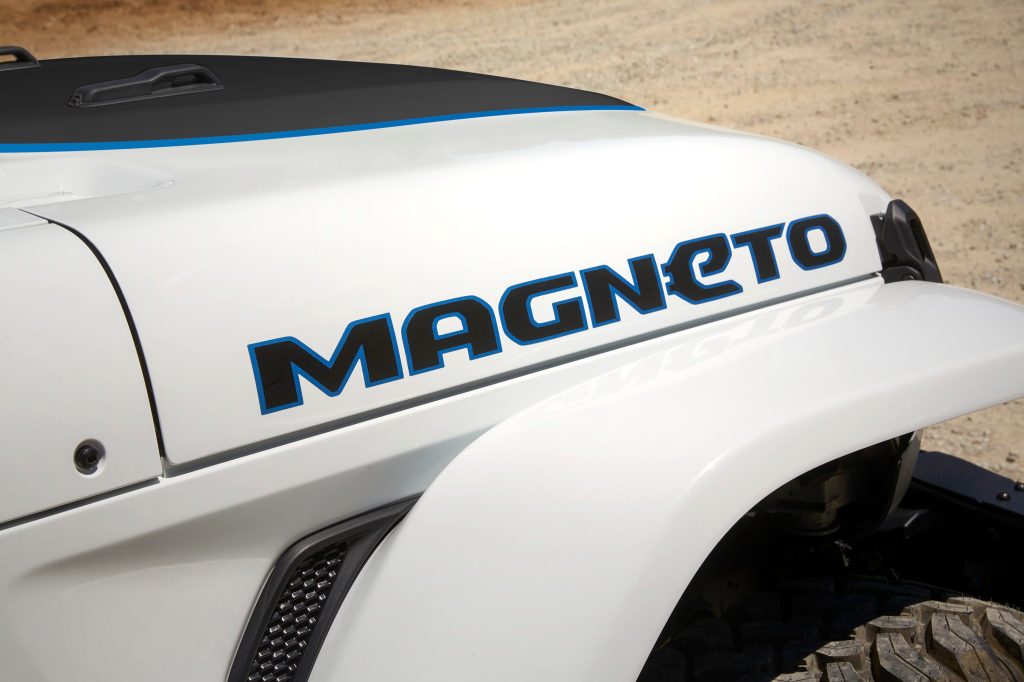
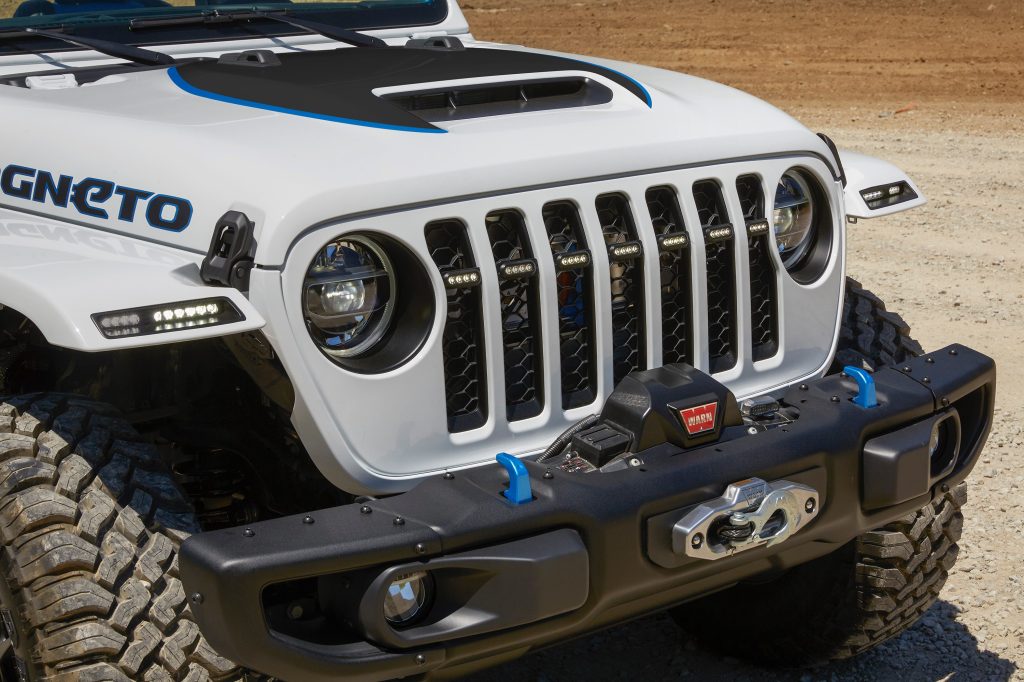
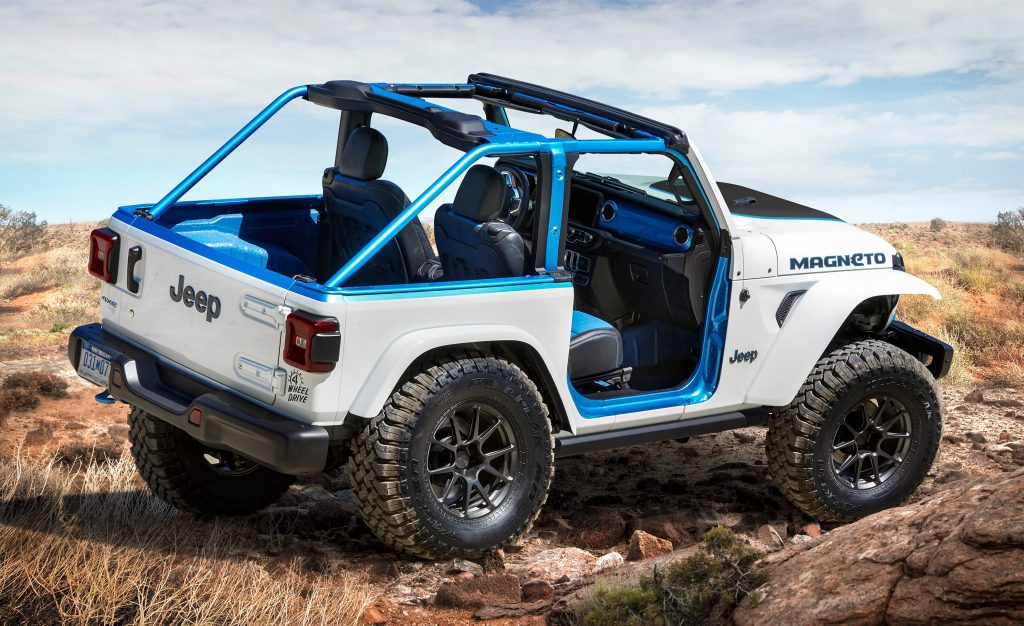
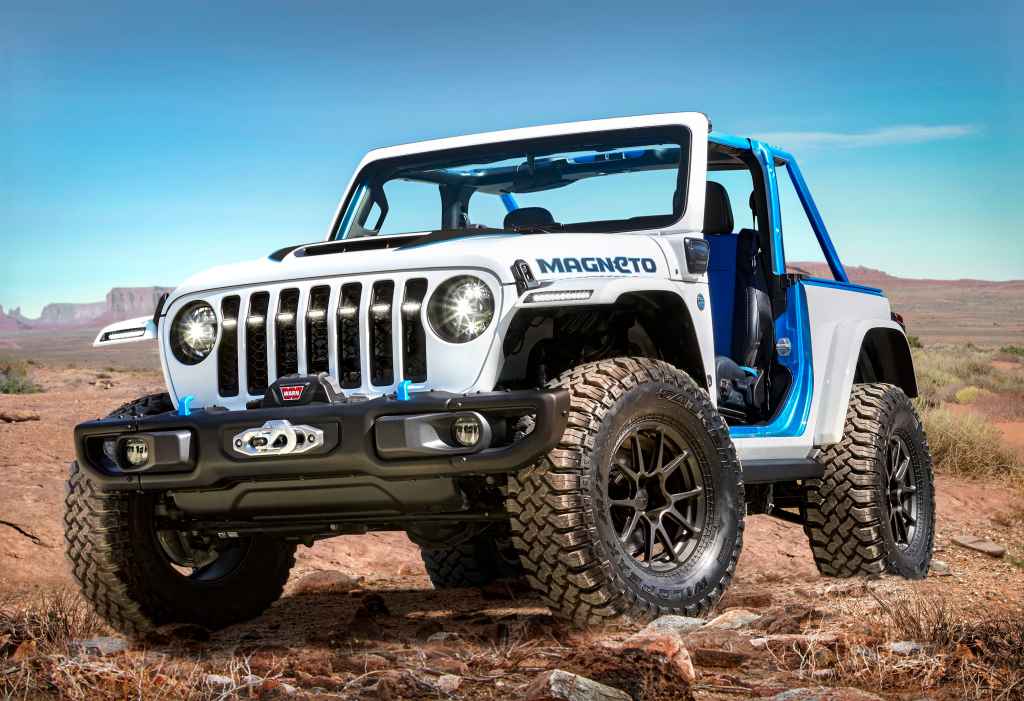
The exterior of the Magneto features a Bright White color with Surf Blue accents, along with a heavy-duty performance hood with center scoop and custom decal, redesigned rear gate and dramatic full-width forward lighting. Custom Royal Blue and Black leather seats with Sapphire-colored inserts and straps, Surf Blue truck bed liner and Mopar slush mats give the Magneto’s interior design an electrified appearance.
The Jeep Magneto comes equipped with a JPP 2-inch lift kit, 17-inch Lights Out black metallic wheels with 35-inch mud-terrain tires, custom roll cage, Mopar Rock Rails, steel bumpers with a Warn winch and a steel belly pan for added off-road capability. “
Greg Scherer could star in a Subaru brochure. His Arkansas-bred lifestyle of fly fishing, canoeing and biking New York’s remote watering holes is exactly why the Crosstrek was built. As he tells it, though, his perfect automotive match emerged out of heartbreak.
During Christmas of 2017, Greg was involved in an accident that totaled his beloved 1999 Honda Civic. Thankfully, there were no injuries, but the cost of repairs far outstripped the value of the loyal manual Honda. Pressed to find a replacement in limited time, Greg did a little soul-searching.
“While I loved my Honda, I was taking it beyond its limits,” Greg recalled, “at times being asked on a trail, “How did you get out here?” I knew I needed something much more capable in capacity to pack gear and deal with terrain.”
Greg remembered how he had eyed his friend’s 2014 Crosstrek finished in advertorial Khaki solid paint. After considering the amount of gear toting, snow plowing and puddle fording on his favorite lesser-traveled paths, Greg made a decision.
His nearest dealer was 45 minutes away. He had to know for sure the car he wanted would be in stock before he asked a friend for a ride.
“I’ll admit that initially I’d planned on getting an automatic due to the amount of traffic I dealt with,” said Greg, “but when I found out that they had the color I wanted in the trim level I wanted, and it also happened to be manual, I knew the stars had aligned for me to have another manual.”
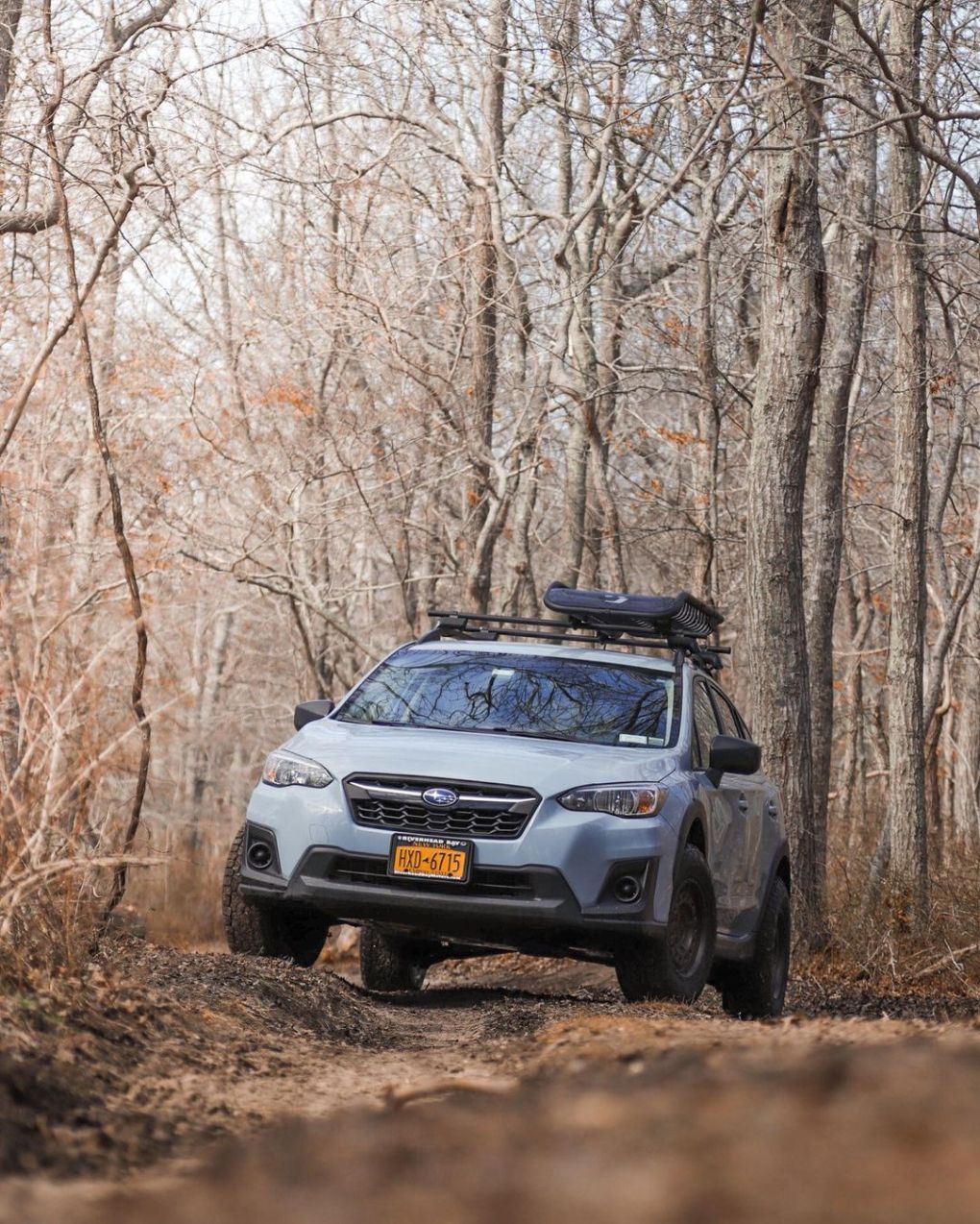
In his first three years of ownership, Greg’s clocked 77,000 miles on his Cool Gray Khaki example. One scroll through his adventure-oriented Instagram feed proves he’s not afraid to use his car.
“My build philosophy for the car is to only replace as needed,” Greg said. “My initial enhancements came in the way of a roof rack to carry bikes, gear and my canoe. Next came an off-road-worthy set of wheels and tires once I reached 75,000 miles on the originals. I’ll keep taking it step by step as things progress naturally, and we both get older together.”
“I was looking for a car I would want to keep for life,” said Vince Santiago, owner of a 2001 Porsche 911 named Wally. Santiago was searching for a car that he could only call “well-sorted”; when he ran across Wally in the Porsche Club of America classifieds, it was an instant match.
Santiago has since logged 6000 miles on his trusty 996, performing his own annual oil change in his driveway. With fresh Mobil 1 and a Mahle filter, Santiago stands prepared for the return of 500-plus-mile roadtrips in a post-Covid world.
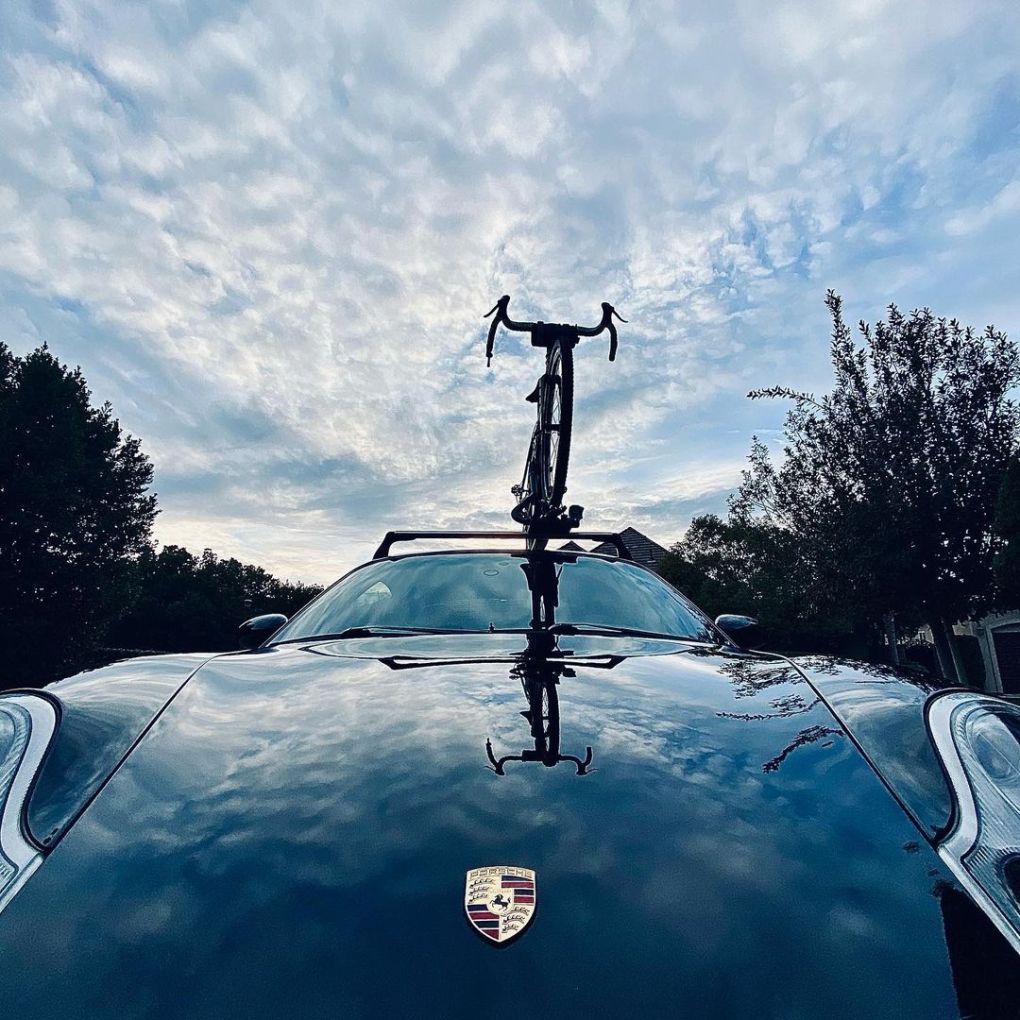
Wally hauls Santiago’s Cannondale bike, which regularly embarks on hour-long pedal-powered tours of the California byways. There’s something satisfying about seeing a Porsche doing blue-collar work, especially when equipped with a proper transmission.
Santiago covers California’s Porsche events on Instagram, where he uses a Leica M240 digital rangefinder camera to bring out the warmth and depth of classic lines. Most of his car show coverage is presented in full color, but when he turns his lens on Wally, moody grayscale and sepia tones bring forth the quietness of moments spent in exotic locales.
Wally wears The Manual Gearbox Preservation Society insignia on his rear windshield, a tremendous honor to those of us on the TMGPS team. Santiago found his dream car, and drives it to its fullest — a story emblematic of the Society.
Some say that the best way to get to know your car is with a good old-fashioned road trip. I decided to break in my new-to-me C34 Nissan Stagea with a long drive to Nagano, home of beautiful mountain peaks dusted with some of the best powder snow in the world. The trip was long, expensive, and completely worth it. The Stagea and I are starting out this relationship on great terms after getting through it all together. Here are the highlights from a manual-transmissioned journey to Japan’s snow country.
The Ride
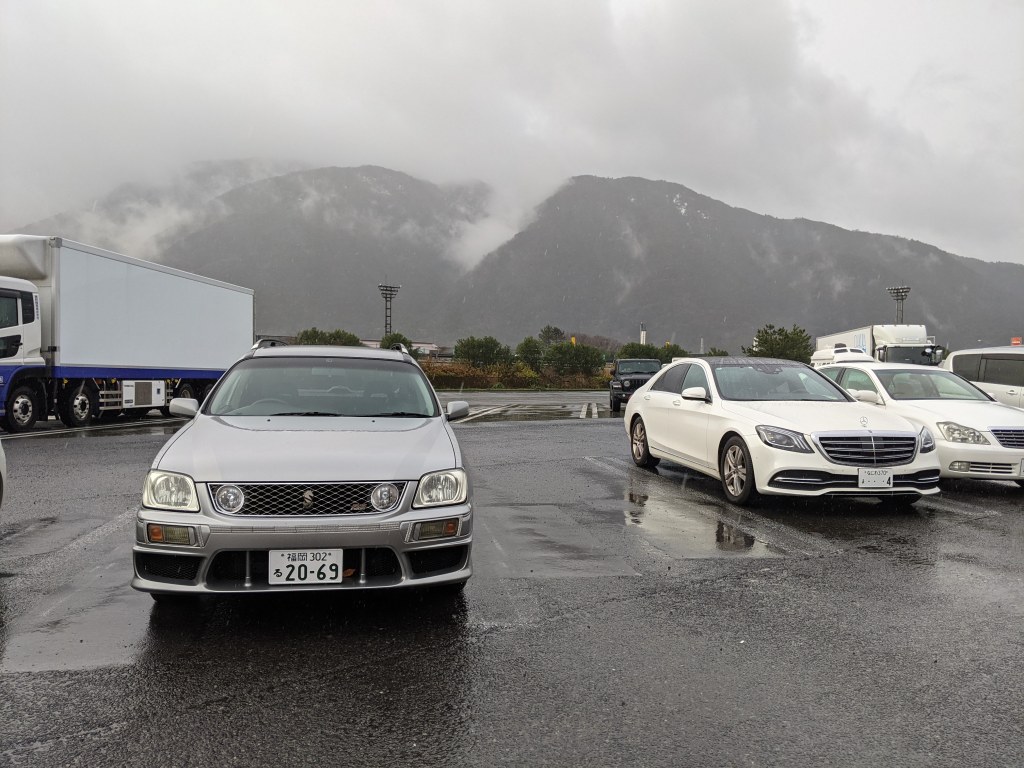
The C34 Stagea in good JDM company before the journey.
I was lucky enough to pick up a dream car in late 2020: a manual wagon with 4WD and a turbo engine from Godzilla’s tamer cousin (Sorry it’s not brown and diesel). This Stagea 25t RS FourS is an amazingly spec’d wagon, with all of the ’90s Nissan goodies one could want. First of all is the RB25DET engine, one of the last iterations of the legendary RB series, with plenty of power and reliability to boot. This came mated to a 5-speed manual transmission, the good old three-pedals that we all know and love. From the transmission, power is distributed to all four wheels via Nissan’s ATTESA system, famously found in the Nissan GT-R of similar vintage. The final abbreviation in this drivetrain formula is HICAS, Nissan’s four-wheel steering system also found on the Skyline and other models. This all comes together to provide an excellent driving experience, and makes this long wagon feel way smaller and nimbler than it has any right to be. It’s also perfect for a winter journey into Japan’s powder bowl.
The Route
Fukuoka to Nagano by car, roughly 14 hours straight.
Japan isn’t a huge country, but there is plenty of space to spread out your wheels and travel. This particular route had us going from the far west island of Kyushu, up to the northern tip of Nagano prefecture. A to B was estimated at roughly 14 hours by Google Maps, and that turned out to be fairly on-point. There was also an incoming snowstorm scheduled to dump many centimeters of precious powder snow on the roads and slopes ahead. Great for my powder-seeking ambitions on the mountain, but the Stagea was considering the slippery roads up to the slopes.
Preparation
Aside from the standard preparations one makes for a road trip, there were other considerations for such a journey across Japan. In the wintertime, Japanese highways often require winter tires (studless, as they’re called here) and/or chains to drive on snowy roads. A set of Yokohama Ice Guard tires did wonders for the trip, and I couldn’t get them sliding as hard as I tried.
Another impediment to the road trip was the toll. Japan has one of the most well-maintained and thoroughly reaching highway networks in the world. Seriously, this country takes infrastructure to an entirely new level. Featuring over 4,500km of tunnels alone, it’s a modern marvel just traveling around on the highways.
To pay for this, they’ve created a clever system, called ETC, to automatically pay tolls via credit card. You must have an ETC reader installed in your car to use this system. My Stagea, with all of it’s wonderful Nissan 90’s tech, did not have a reader. So off to the Yellow Hat tire store we went to get an ETC reader installed. Once finished, I had a lovely little Japanese woman alerting me of my toll balances all along the way. Luckily she can be muted.
The Journey
Taking a break on the Meishin Expressway
This trip ended up being a sort of mad-dash to get out there. We left around 7pm, planning to run all night and nap along the way. Nothing too remarkable on the journey there, just long roads and plenty of tunnels to cut the signal on my podcast stream. The Stagea is an amazingly well-suited road trip machine; despite the lack of cruise control it was smooth sailing from Fukuoka to Kobe without a hitch. The turbo kicks in right under 3000 RPM, making for plenty of fun overtaking action along the way.
Around Kobe I settled for the night at a highway service station, which is a fairly common practice in Japan. Even cars are socially distanced here, usually with two or three spots between them for privacy. There were plenty of Alphards and Hiaces with full curtains pulled over the windows for ultimate VIP napping. I didn’t have such luxurious curtains, but slept well under the cargo cover in the back of the Stagea. The length of the wagon allowed me to easily stretch out all 170cm of my height with room to spare. The Stagea passed the first road trip test with flying colors.
Japan does vans right, so right that they even do USDM vans right!
I managed three to four hours of solid Stagea napping before waking up and deciding to head out, but not before enjoying the luxuries of the Japanese service station. With an aesthetic similar to your favorite outlet mall, this rest stop was a great place to wake up. Also, the toilets on Japanese highways are second to none: seriously, you need to try them out if you ever come over here. Anyway, after enjoying the facilities, we were off again.
Anti-Tailgating poster in a Japanese highway service station
The next leg of the journey spanned from Kobe to Nagoya on the Meishin Expressway, passing Osaka and Kyoto on the way. Luckily, this highway skips most of the major city centers, and traffic was moderate the entire way. It was mostly a fifth-gear affair throughout the Meishin, and smooth sailing until we got into higher elevations.
Once passing Nagoya, we hopped on the Chuo Expressway, one of two major routes connecting Tokyo and Nagoya. Here, the rain began, which was definitely snow up in the hills. We were lucky not to encounter snow until we were well into the valley, and even then it was quite light. We made the trek without any issues, and rolled into Matsumoto in time for lunch roughly 17 hours after beginning the trek from Fukuoka.
Snowy 4WDs Of Nagano
A well insulated Prado in Nozawa Onsen Village.
We spent a week in Nagano, traversing between Hakuba, Matsumoto, and Nozawa Onsen. The Stagea performed perfectly in all conditions, from rain to blizzard, with no issues at all. It was an absolute joy to row through the gears up and down these snowy mountain passes, getting to and from the various ski resorts we hit up during the week.
We also met many other amazing Japanese winter machines, also gladly traversing the snow just as they were designed to do. It’s seriously important to have proper snow tires and 4WD goes a long way out here. The locals and the tourists were all prepared, and we loved the sights along the way.
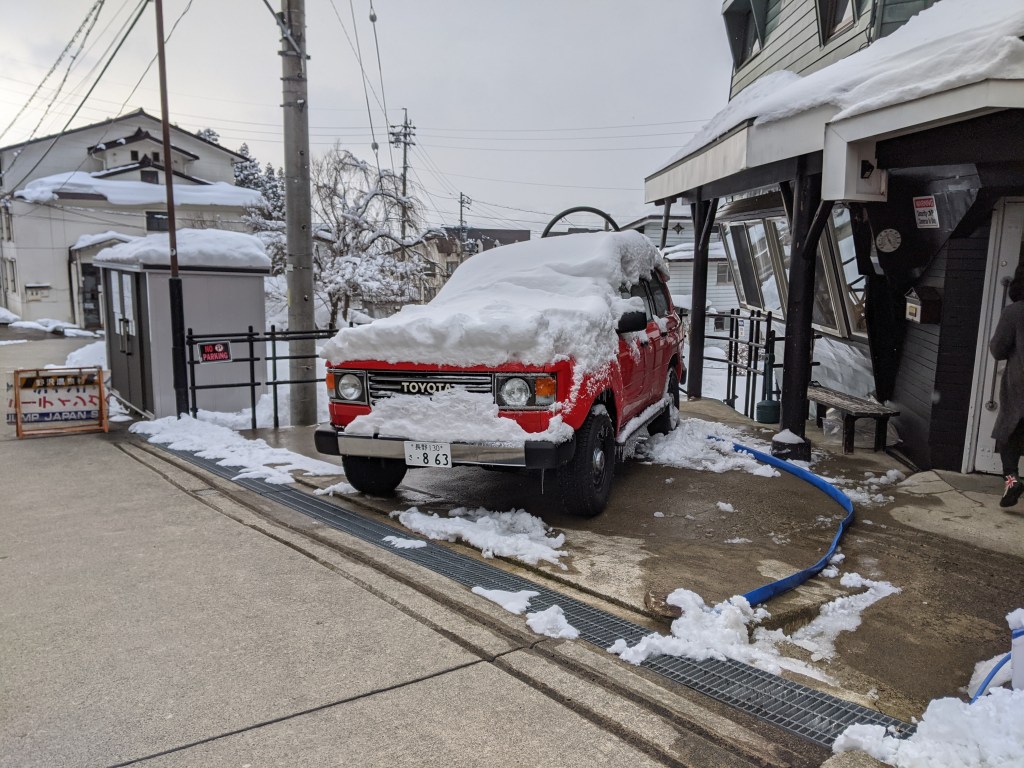
The Land Cruiser will always look right at home in the snow, this one had a manual as well!
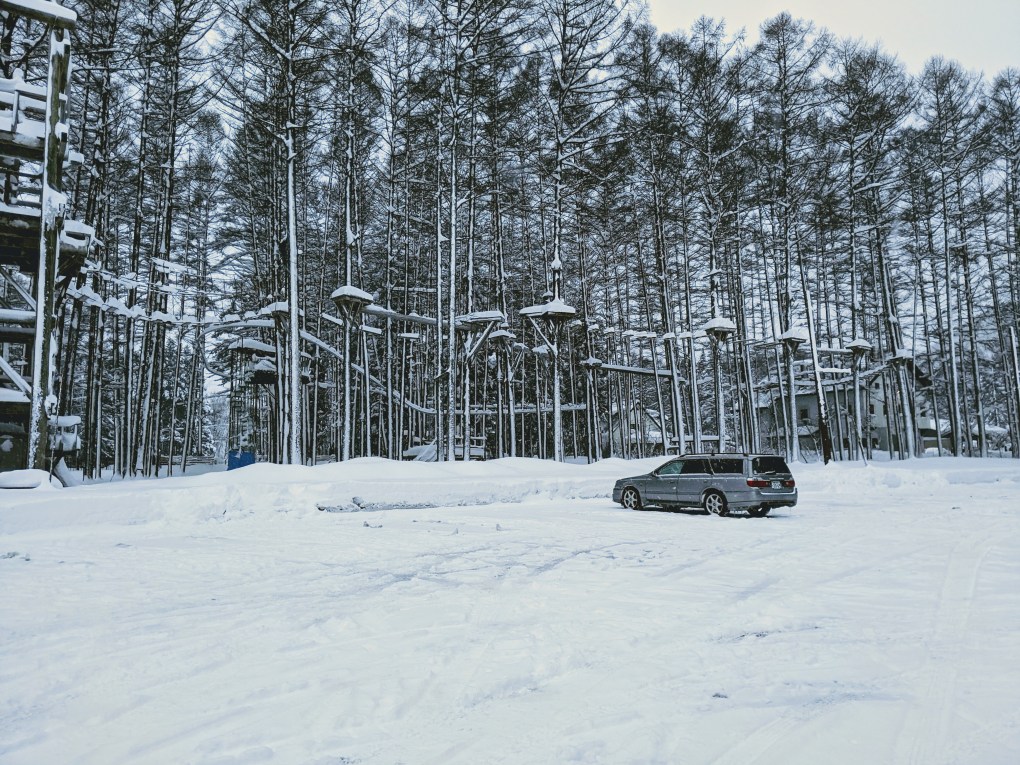
The last stop of the journey was Nozawa Onsen, where the Stagea got a very healthy coating of snow while parked for a few days at the top of the hill. Even with all the weight, it crawled out just fine.
This was after we had already removed some of the snow from the Stagea
The Return Trip
Snow tires performed amazingly well throughout the journey
After a healthy week in the powder it was time for us to return back to Kyushu, the same way we came up. We stopped at the local michi no eki (Road Station) on the way out for some refreshments and a toilet break before hitting the long road home.
The whole journey was a great experience and a truly bonding moment for the Stagea and I. This wagon is the ultimate companion for long distance journeys and the daily commute. Better yet, it’s a true pleasure to row through each gear and push those RPMs up to hear the turbo spool. We’re looking forward to many more journeys together, and we hope you’ve got some manual roadtrip plans in the future as well.









 TMGPS JOURNAL
You must be logged in to post a comment.