
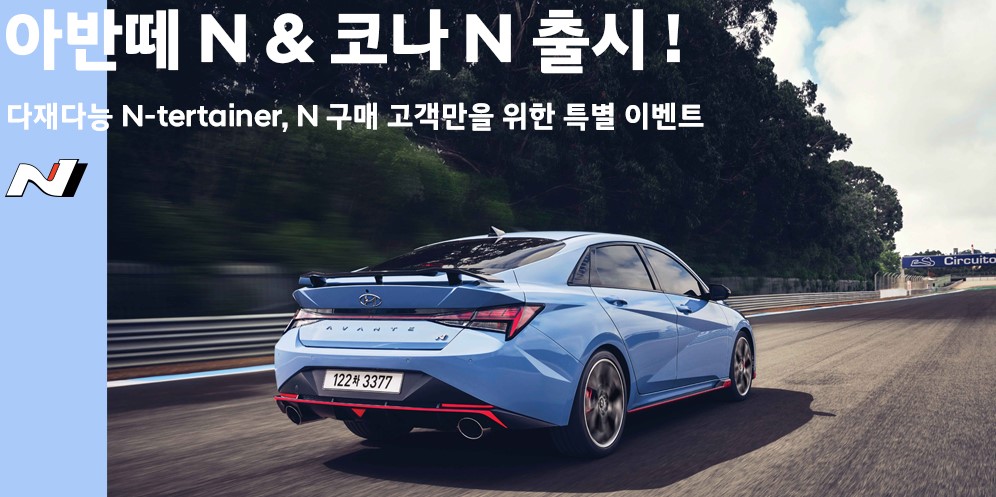
Ask the Owners: Is the Elantra N Worth Losing the Veloster?

Multiple outlets such as carsdirect.com have reported since April that Hyundai would be offering fewer trims of the Veloster after 2021. A few weeks ago, Hyundai confirmed that all versions of the Veloster would be discontinued except for the track-ready 275-horsepower Veloster N. Although we may not like this change, we can’t argue that it doesn’t make financial sense, since Veloster sales have been in decline for several years. In 2019, Hyundai sold 12,849 Velosters, while only mustering to move 7,581 more in 2020. Both numbers are a sharp decline from the Veloster’s best sales year, when Hyundai sold 38,102 copies of the 2012 model.

Losing the base Veloster is certainly a blow to the manual shifting crowd here at TMGPS. The Veloster offered a manual transmission with every engine and every trim. The base Veloster moves with a six-speed mated to a 2.0-liter naturally aspirated four-cylinder engine producing a respectable 147 horsepower. It won’t win any races, but it reaches highway speeds at a respectable pace. The six-speed Veloster Turbo R-Spec steps up to a 1.6-liter turbocharged GDI four-cylinder producing 201 horsepower. Before the Veloster N was introduced, the Veloster Turbo was the hottest version of the car. This is a sweet spot for most buyers; at $23,450, it’s one of the cheapest ways to get into a 200+ horsepower car. At the top of the range lies the Veloster N, with a six-speed manual transmission mated to a 275-horsepower 2.0 liter turbo GDI four-cylinder. At $32,250, the Veloster N is track-prepped to compete against the likes of the Honda Civic Type R and the Volkswagen Golf R. (To read about the 2022 Honda Civic Type R, click here.)

Due to limited sales in only one trim level, it isn’t a stretch to guess that the Veloster N may be discontinued after 2022. Owners in the TMGPS.org Member Group on Facebook swiftly reacted to the news.

“I own a first-gen Veloster Turbo M/T Tech, and while I’m a bit sad to see the line being discontinued, it also seems like it’s for the best,” said TMGPS.org member Justin Cook, who feels the second-gen Veloster lost some of the first car’s charm. “The first-gen, while falling short of the original concept’s glory, still retained many of the styling cues and much of the unique, quirky spirit of the concept. The quirky uniqueness of the three-door layout — “two on the safe side” as Hyundai billed it — brilliant. The heated seats by Recaro, with heating elements that actually run up the back of the seat, are well above their class, and absolutely outstanding… I bloody love my seats.”

Though the Veloster might disappear into history, for manual-shifting Hyundai fans, the future isn’t all bleak. For several months, Hyundai has teased the Elantra N, which will feature the same six-speed and 275-horsepower turbocharged 2.0 liter engine from the Veloster N. Set to bow in 2022, the Elantra N will be sold alongside the Veloster N for at least that year. While both the Elantra and Veloster look like they could be based on the same chassis, they are in fact distinct: The Elantra has a slightly longer wheelbase, and is 15 inches longer overall. The longer wheelbase might seem like a detriment, but by gaining two full sized rear doors, owners are more likely to haul passengers than with the Veloster’s smaller third door — making it a more practical choice for families and expanding its sales potential.

The 2022 Hyundai Elantra N should start around $35,000, marking a $3000 premium over the Veloster N, but still $4000 cheaper than the Civic Type R and nearly ten grand less than the Golf R.

Miles Wenzel is a manual enthusiast with a love for the great outdoors. Follow #DriveYourCars, a video guide for DIYers who wrench to drive and drive to live.
The Stickshift Prevails in the Next Civic Si and Type R

In an interview with CivicXI.com last week that you can see here, Honda Media Relations Manager Carl Pulley revealed that the manual transmission will live on in the next generation of the Honda Civic. Pulley confirmed that both the Civic Si and the Civic Type R will exclusively feature Honda’s legendary manual gearbox. Pulley also said that while the manual transmission will no longer be available in the sedan, buyers will still have the option to check the box for a manual in the five-door hatchback.

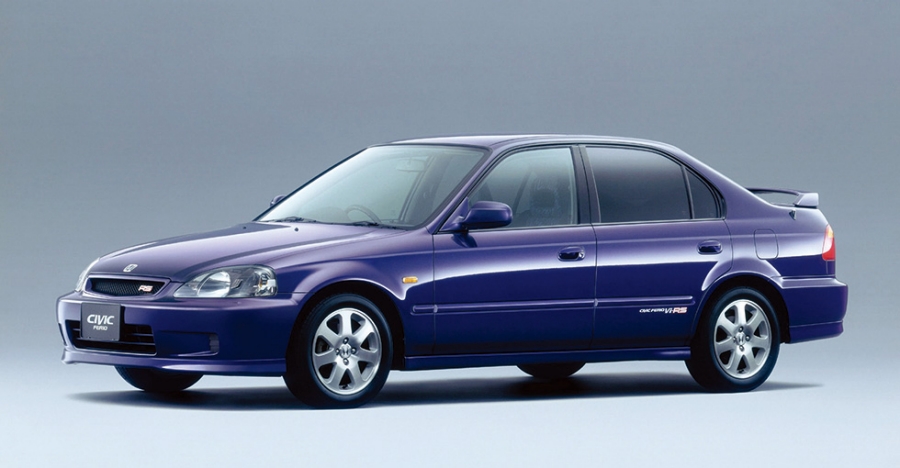
We here at TMGPS are obviously excited that Honda is continuing with its tradition in offering their performance line of Civics with no other option than a stick shift. Starting with the third generation of Civics, the Si variant hit the U.S. shores in November of 1984 with five-speeds commanding 91 horsepower from a 1.5 liter 12-valve SOHC engine. VTEC was introduced to the U.S. spec Sis in 1992 with the fifth generation Civic, again with five speeds and an increase of power to 125 horsepower from a 1.6-liter engine. The legendary 1999 Civic Si was and still is the Civic that most of us remember from our youth. The B16 VTEC 1.6 liter 4 cylinder sporting a 8200 RPM redline brought 160 horsepower to the five-speed manual. Iconic Electron Blue Pearl paint made for one of the most coveted front-drive performance cars of all time.

While Japan has enjoyed Type R variants of Hondas for decades, America only recently began to enjoy performance-focused Civic Type R in 2017. Whereas the Civic Si historically sports more luxurious amenities like a moonroof and a modest power increase over a regular Civic, the Type R in recent years has bet big on horsepower and suspension tweaks. The current Civic Si’s 205 horsepower is respectable; however, the Type R’s 306 horsepower makes it debatably one of the best front-drive track attack machines. The Civic Si features a snappy six-speed manual. The Civic Type R once again shows its racing roots, offering a shorter throw gear selector and automated rev matching for both upshifts and downshifts.

As of now, Honda has not released power numbers for the eleventh-generation Civic Si or Type R. Whether power numbers increase or stay put, it’s not too early to say that these two performance models will be Honda’s best efforts in the Civic range to date.


Could a Widebody AWD GR Corolla Hit Toyota Showrooms Soon?

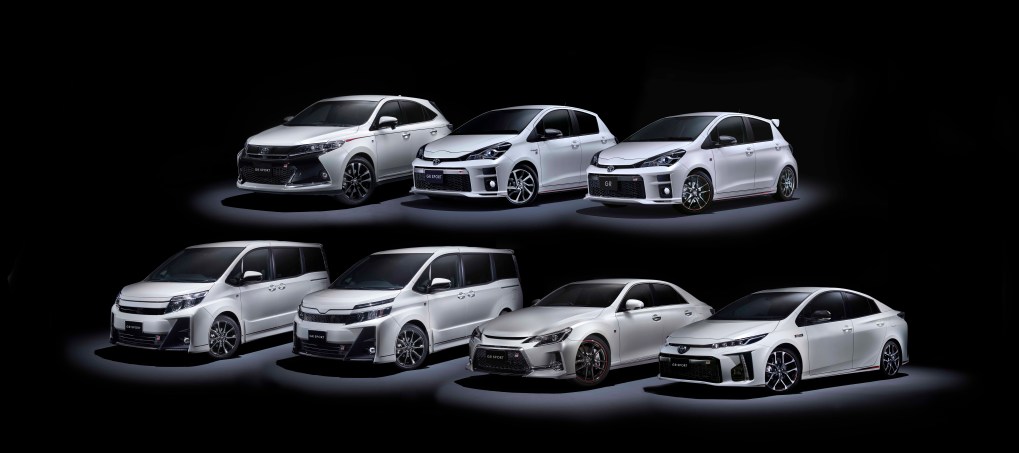
Rumors of a fire-breathing, manual transmission, all-wheel-drive Toyota GR Corolla Hatchback were reported by Car Sensor in Japan last week, brought stateside by James Gilboy at The Drive. Could we soon see a 297-horsepower turbocharged three-cylinder under the hood of the sporty-looking but mild-mannered Corolla on U.S. shores?

Rumor holds the GR Corolla could crib its engine, transmission and all-wheel-drive system from the internationally heralded GR Yaris. A highly capable Corolla being offered stateside might dull the pain of being snubbed from having the GR Yaris available to us, especially if the car receives a slight power bump over the Yaris as forecasted by Car Sensor.

The 306-horsepower Honda Civic Type R outmuscles the current GR’s powertrain. However, the front-drive Civic may be at a disadvantage when it comes to which wheels lay down power. Honda’s heritage lies in fast front-drive compacts; the GR Corolla pulls a page from Toyota’s all-wheel-drive history instead, reaching back to the sixth-generation E90 Corolla All-Trac. Car Sensor goes a step further to validate that historical connection, reporting that a separate GR Corolla Wagon is a distinct possibility, perhaps even with a hybrid system coupled to a slightly larger-displacement engine.

Let’s assume the GR Corolla Hatchback would share the same selectable drive modes available in the GR Yaris. The GR Yaris has an “advanced driving force system” utilizing an electronically controlled multi-plate clutch, which provides a certain amount of torque to the front and rear wheels based on the drive mode selected. In the normal driving setting, the engine’s torque is split conservatively with 60% in the front, and 40% in the rear. Once the selector is switched to sports mode, the GR Yaris switches to an aggressive 30% front, 70% rear split. Track mode divides the torque evenly with a 50/50 split. Torsen provides limited slip differentials in both the front and back of the GR Yaris, making the car ready for track events from rallycross to autocross.

TMGPS member Nathan Geer shared his thoughts on the GR Corolla’s potential: “I can’t wait for Toyota to release the details,” said Geer, the owner of a 2019 Corolla Hatchback finished in Blue Flame. “It should be the car that finally puts Toyota in the STi and Golf R playing field.”

Miles Wenzel is a manual enthusiast with a love for the great outdoors. Follow #DriveYourCars, a video guide for DIYers who wrench to drive and drive to live.


1 in 6 Ford Bronco Buyers Pick the Manual Transmission

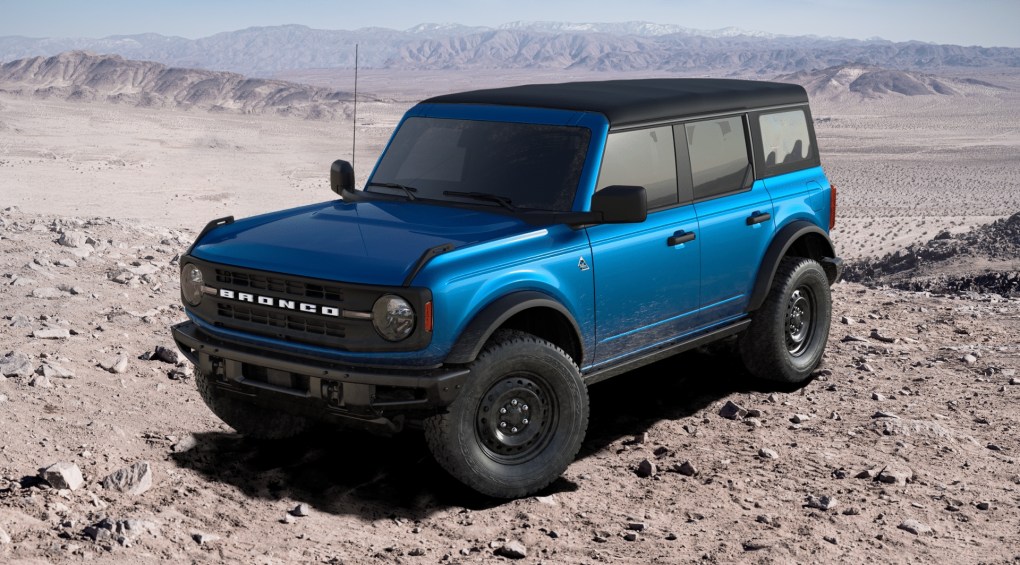
The Ford Bronco is quickly becoming a symbol of hope for stick shift enthusiasts. Out of 125,000 pre-orders, 22,500 will be delivered with a row-your-own box — an 18 percent take-rate for the seven-speed manual transmission.

Only the base 270-horsepower 2.3-liter turbocharged four cylinder engine can be paired with the manual transmission. While some may be disappointed the more powerful 310-horsepower 2.7L twin-turbo V6 isn’t available with a manual, it’s important to note that the turbo four is still more powerful than any available engine in any previous-generation Bronco.

The new Getrag 7MTI550 manual transmission operates like a normal six-speed during daily driving. The additional seventh speed is a dedicated off-road crawl gear, marked with a “C”, placed just below reverse on the left side. Crawl is an extremely low 6.588:1 ratio — for comparison, the Jeep Wrangler low gear is 5.13:1. The crawl gear is especially useful on steep rocky terrain and in vehicle recovery operations. To put it another way, the crawl gear will help you be the hero of the day as you pull a buddy’s Jeep out of a deep mud hole.

On the manual transmission Black Diamond trim, buyers are offered two different transfer case options. The standard part-time two-speed transfer case has three selectable drive modes: Two-Wheel High, Four-Wheel High and Four-Wheel Low.  The optional Advanced 4×4 Automatic On-Demand Engagement transfer case adds a fourth drive mode called 4A, which continuously adjusts power to the front wheels based on current driving conditions. As in other Ford systems, 4A keeps the Bronco in rear-drive until slip is detected. Once slip occurs, a proportional amount of torque is sent to the front wheels to keep control. In my personal experience, I have found this mode quite useful on wet pavement in other Ford vehicles.

Also exclusive to manual Broncos are Hill Descent Control and Crank in Gear. Hill Descent Control utilizes anti-lock braking and traction control to manage wheel spin and maintain a constant speed while traveling downhill. Crank in Gear enables the driver to start the engine while in gear in order to execute more advanced off-road maneuvers such as a hill recovery technique.

There are so many different Bronco combinations that the only easy choice is picking the transmission. I would option my four-door Bronco Black Diamond in Velocity Blue with the seven-speed, steel wheels and the standard transfer case for the sake of tradition.

If the global microchip shortage does not hinder production, delivery of reserved Broncos is expected to start in June 2021.  

Miles Wenzel is a manual enthusiast with a love for the great outdoors. Follow #DriveYourCars, a video guide for DIYers who wrench to drive and drive to live.