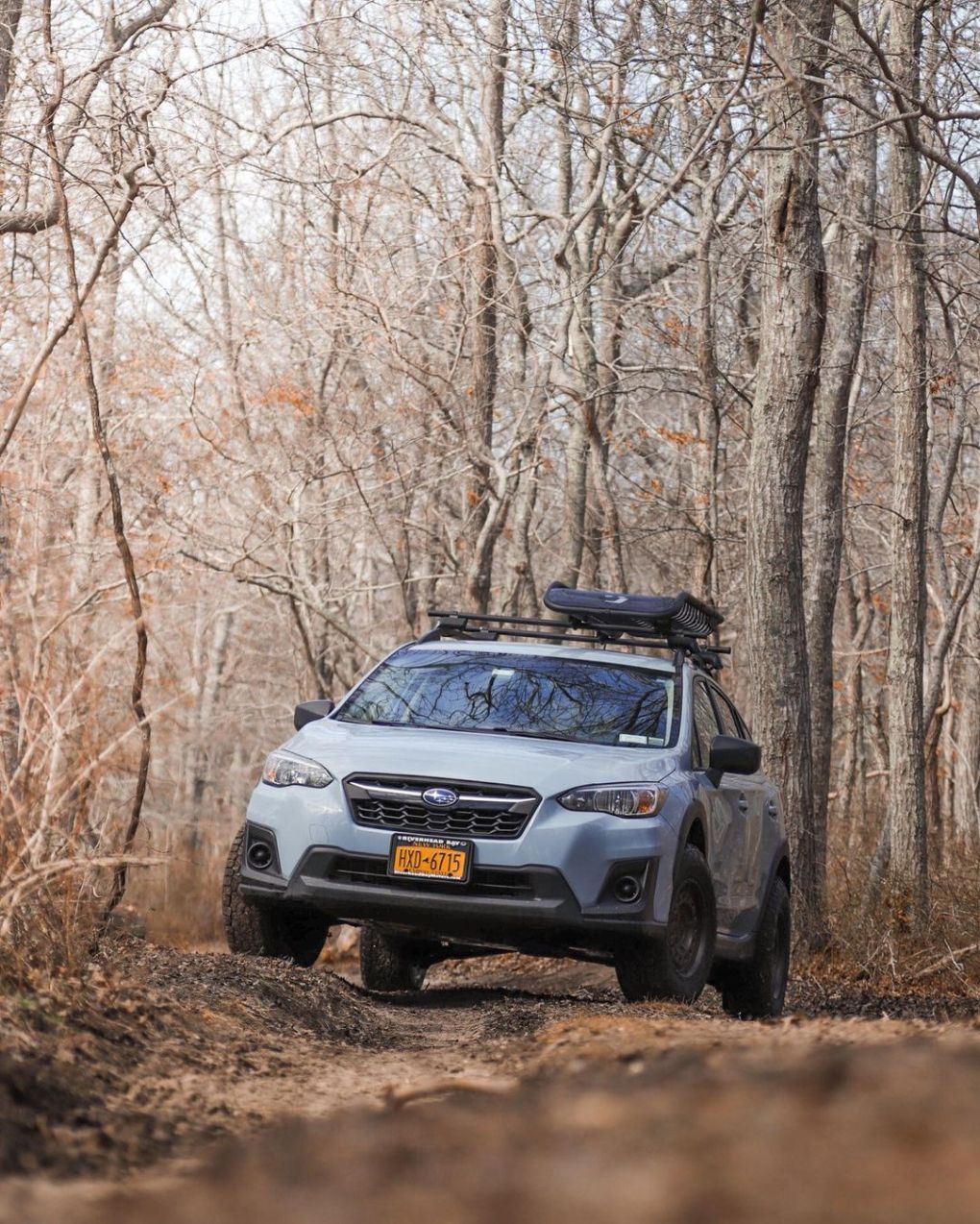
Greg Scherer could star in a Subaru brochure. His Arkansas-bred lifestyle of fly fishing, canoeing and biking New York’s remote watering holes is exactly why the Crosstrek was built. As he tells it, though, his perfect automotive match emerged out of heartbreak.
During Christmas of 2017, Greg was involved in an accident that totaled his beloved 1999 Honda Civic. Thankfully, there were no injuries, but the cost of repairs far outstripped the value of the loyal manual Honda. Pressed to find a replacement in limited time, Greg did a little soul-searching.
“While I loved my Honda, I was taking it beyond its limits,” Greg recalled, “at times being asked on a trail, “How did you get out here?” I knew I needed something much more capable in capacity to pack gear and deal with terrain.”
Greg remembered how he had eyed his friend’s 2014 Crosstrek finished in advertorial Khaki solid paint. After considering the amount of gear toting, snow plowing and puddle fording on his favorite lesser-traveled paths, Greg made a decision.
His nearest dealer was 45 minutes away. He had to know for sure the car he wanted would be in stock before he asked a friend for a ride.
“I’ll admit that initially I’d planned on getting an automatic due to the amount of traffic I dealt with,” said Greg, “but when I found out that they had the color I wanted in the trim level I wanted, and it also happened to be manual, I knew the stars had aligned for me to have another manual.”
In his first three years of ownership, Greg’s clocked 77,000 miles on his Cool Gray Khaki example. One scroll through his adventure-oriented Instagram feed proves he’s not afraid to use his car.
“My build philosophy for the car is to only replace as needed,” Greg said. “My initial enhancements came in the way of a roof rack to carry bikes, gear and my canoe. Next came an off-road-worthy set of wheels and tires once I reached 75,000 miles on the originals. I’ll keep taking it step by step as things progress naturally, and we both get older together.”
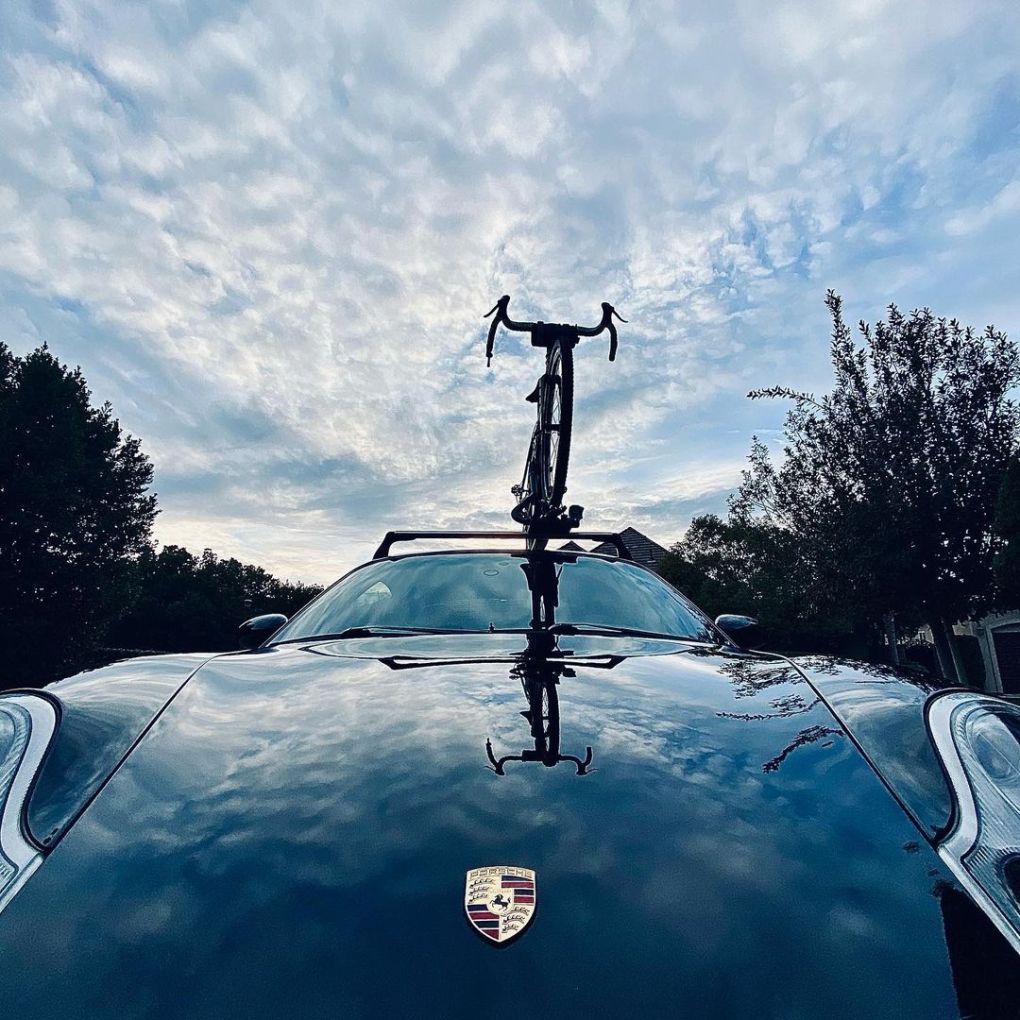
“I was looking for a car I would want to keep for life,” said Vince Santiago, owner of a 2001 Porsche 911 named Wally. Santiago was searching for a car that he could only call “well-sorted”; when he ran across Wally in the Porsche Club of America classifieds, it was an instant match.
Santiago has since logged 6000 miles on his trusty 996, performing his own annual oil change in his driveway. With fresh Mobil 1 and a Mahle filter, Santiago stands prepared for the return of 500-plus-mile roadtrips in a post-Covid world.
Wally hauls Santiago’s Cannondale bike, which regularly embarks on hour-long pedal-powered tours of the California byways. There’s something satisfying about seeing a Porsche doing blue-collar work, especially when equipped with a proper transmission.
Santiago covers California’s Porsche events on Instagram, where he uses a Leica M240 digital rangefinder camera to bring out the warmth and depth of classic lines. Most of his car show coverage is presented in full color, but when he turns his lens on Wally, moody grayscale and sepia tones bring forth the quietness of moments spent in exotic locales.
Wally wears The Manual Gearbox Preservation Society insignia on his rear windshield, a tremendous honor to those of us on the TMGPS team. Santiago found his dream car, and drives it to its fullest — a story emblematic of the Society.
Peak ’80s geek-chic down to its four-eyed grin, the 1984 Ford Mustang SVO rocked a 2.3-liter turbo, a bi-plane spoiler and instantly identifiable full-face machined wheels. The rebirth of a turbo-four Mustang 31 years later was a spiritual resurrection, right down to the fabled 2.3-liter displacement. With a standard six-speed manual and an expressive color palette framed by hues of green, blue and orange, the 310-horsepower Mustang EcoBoost is a compelling package that needs just one dash of spice to bring the SVO aesthetic back to life: a decent set of wheels.
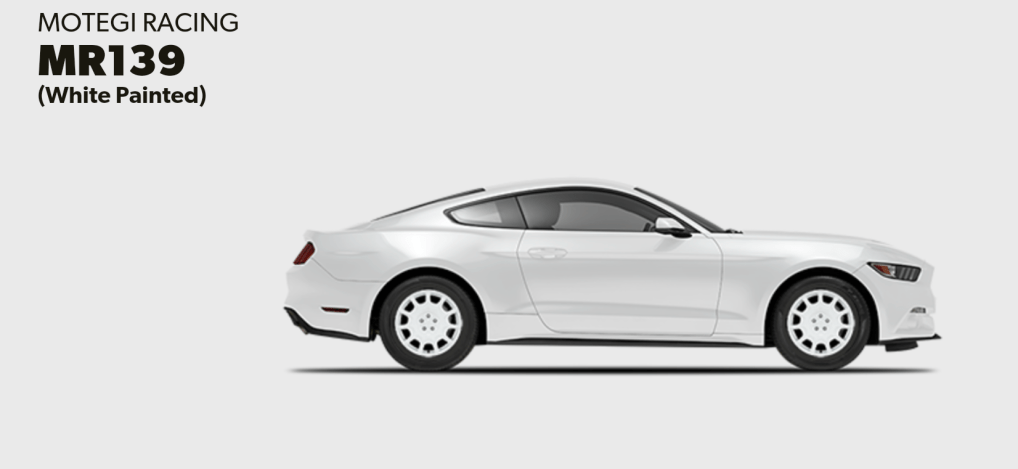
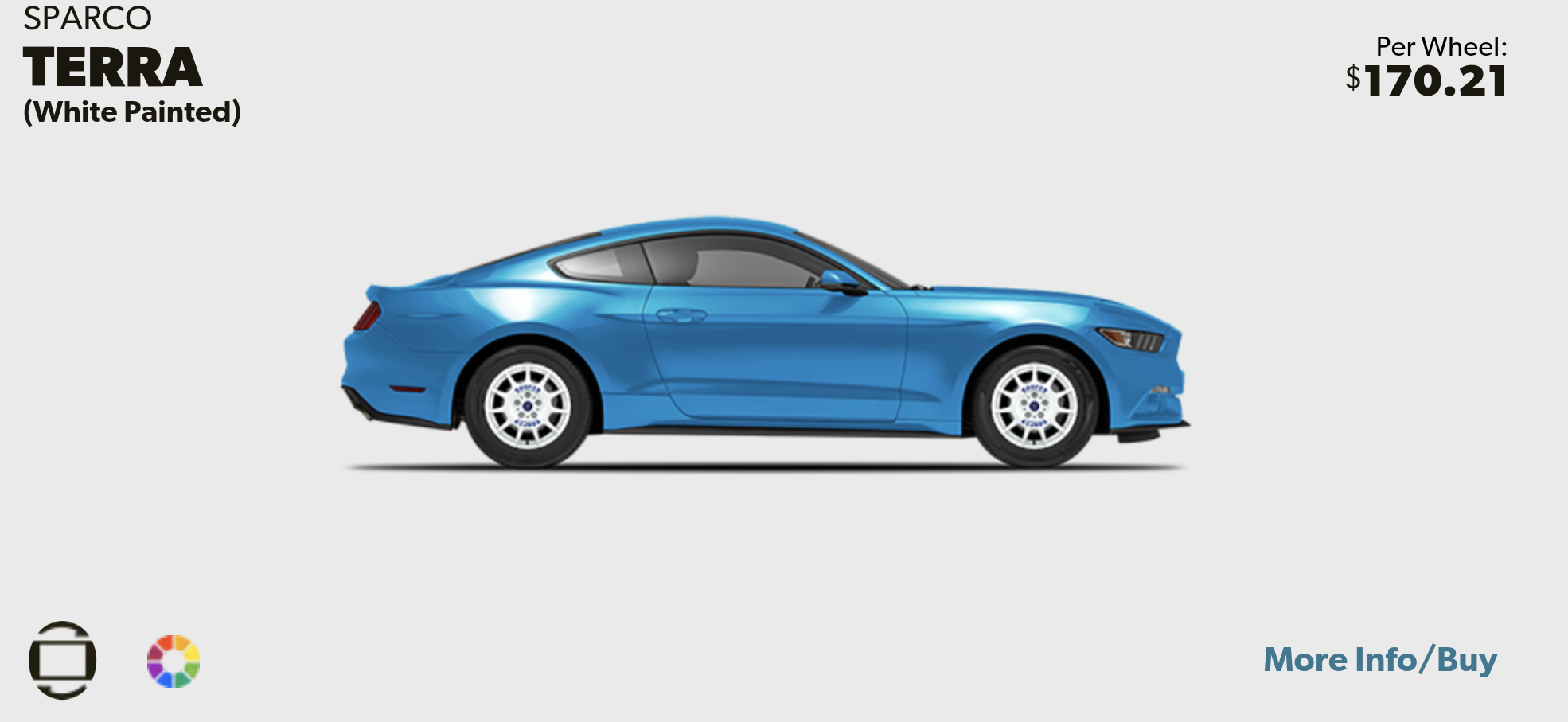
The base Mustang’s standard-issue silver flangeless five-spoke wheels are par for the segment, with a conventional (read: forgettable) design. But as Tire Rack’s configurator shows, $650 buys a set of bright white Motegi Racing MR139 rally wheels that makes the entire chassis pop, transforming the modern Mustang’s silhouette into a Group A rally homologation special.
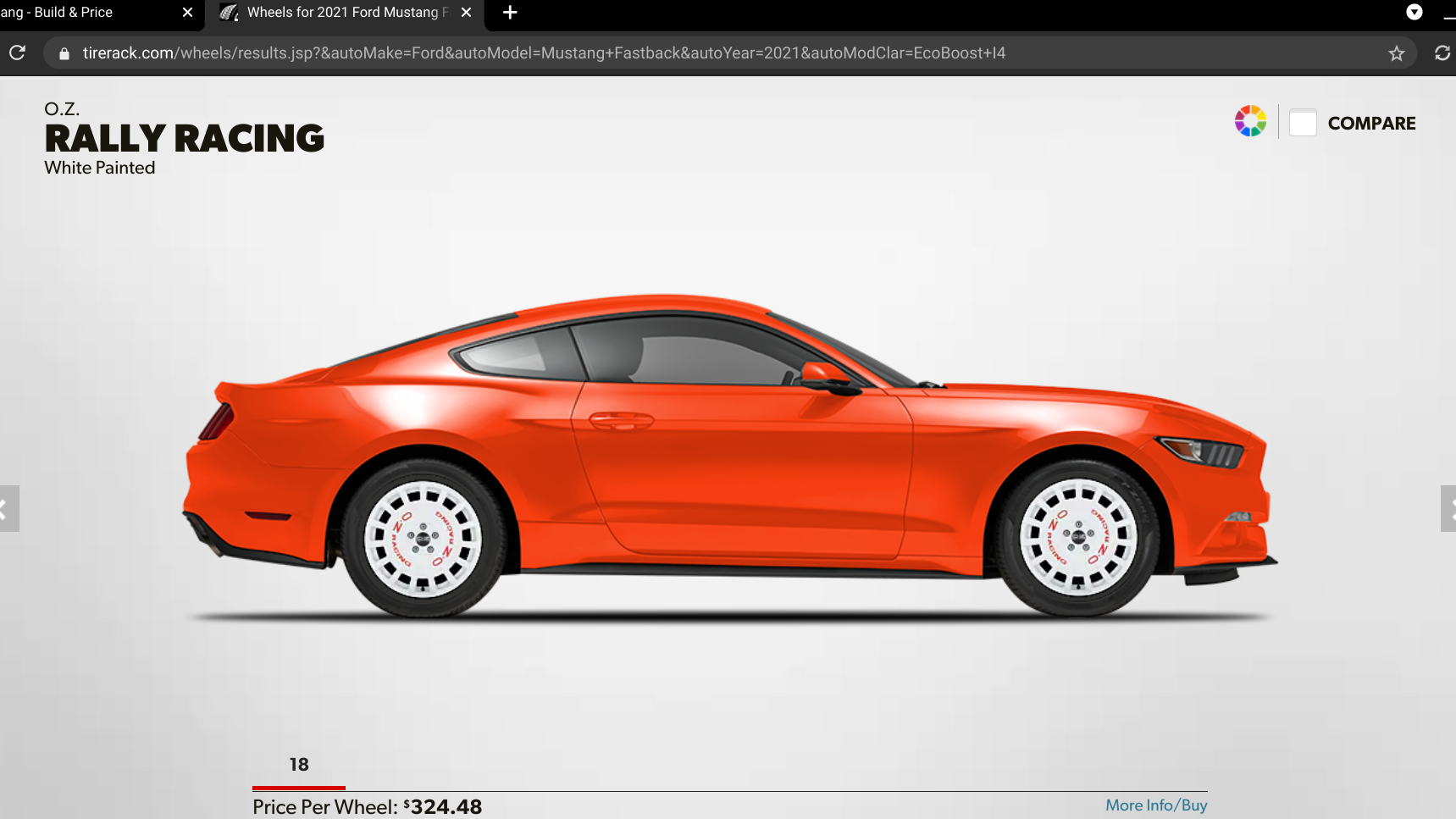
Sparco’s wheels are manufactured by O.Z., marking a low-cost way to equip Italian rally cred. The $680 set of 17-inch Sparco Terra wheels comes with a blue sticker kit that seems to hold up well during daily use, if Instagram is to be trusted. The Sparco logo color-keys well with Ford’s Velocity Blue paint — it’s not the look you’d expect to see on a Mustang, and that’s absolutely the point.
Be warned: Tire Rack’s mobile-friendly configurator is a super-fun timesuck, allowing you to thumb through your car’s OE color palette and try on different kicks. White wheels look good on everything, but there’s something forbidden and delicious about seasoning America’s performance icon with European flavor — an effect that still works three decades after the Mustang SVO gave us the idea.
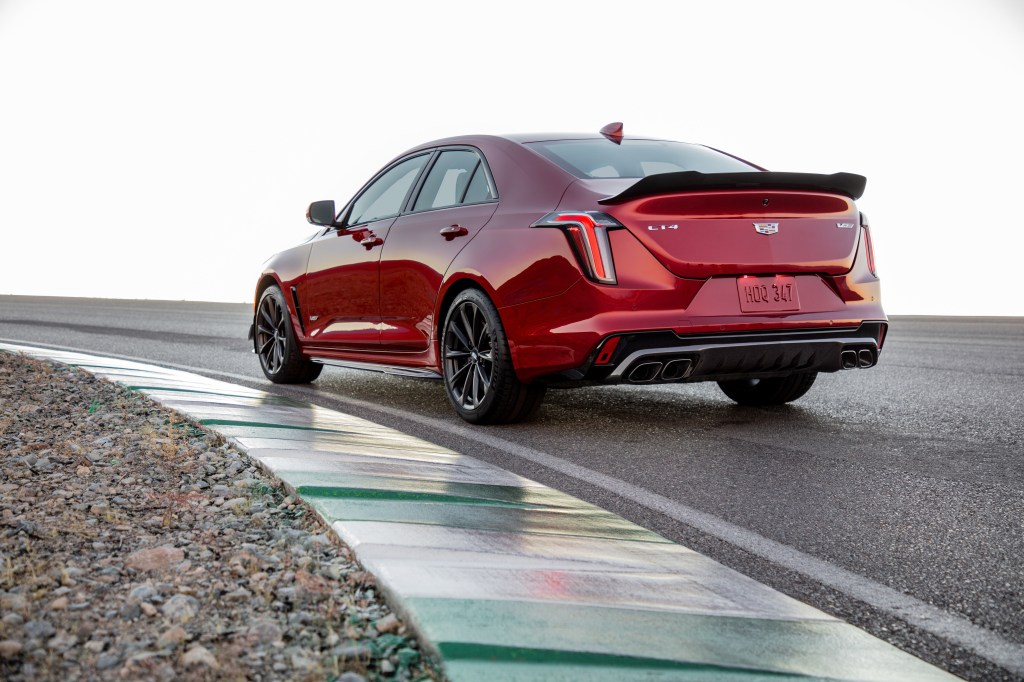
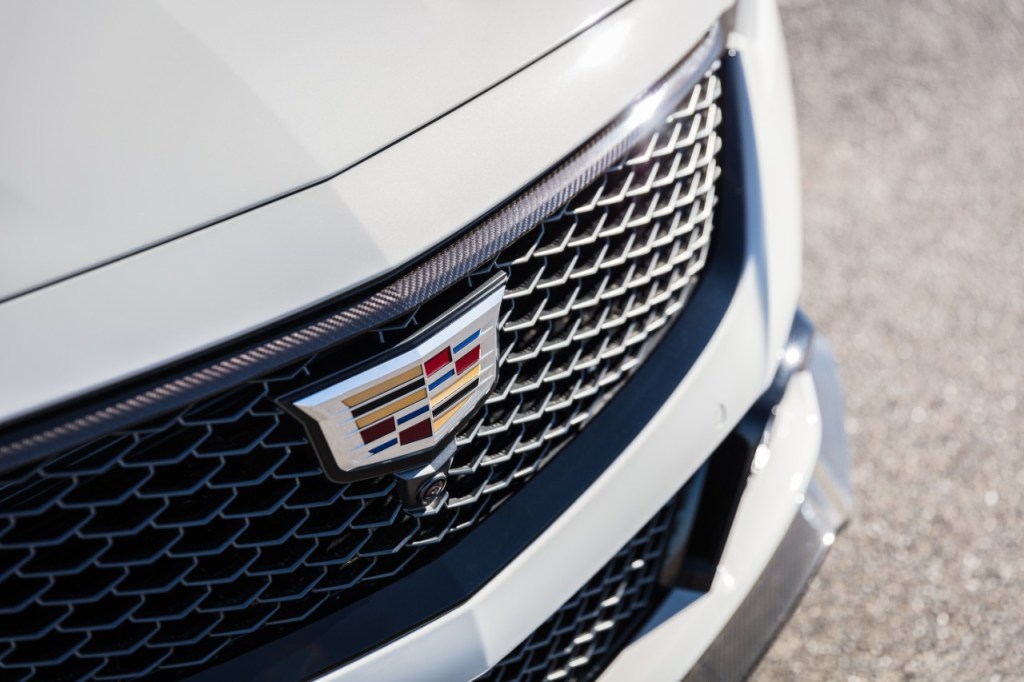
At the V-Series Blackwing reveal last night, Cadillac’s fastest pairing shed their race-inspired camouflage and showed their true lines to the world. After an evening of reflection, six particular endearments set up the CT4-V and CT5-V for the perfect launch.
A five-digit serialized VIN plate represents the model (8 = CT5-V Blackwing), the transmission (6 = manual transmission) and the number vehicle built (001 = first vehicle built).
The first manuals will be auctioned off for charity.
Though early adopters can reserve one of the first 250 cars with a refundable $1000 deposit, GM is saving the very first manual VINs for a higher cause. The reservation site states that “GM intends to auction the first manual transmission VINs for the CT4-V Blackwing and CT5-V Blackwing and donate the proceeds to a worthy cause.” Keep an eye on the high-profile auctions this summer, just in case.
668 horsepower. In a sedan.
Not a crossover. Not a truck. As Cadillac makes the necessary transformation to an electric vehicle brand, the Blackwing is a 200-mph last hurrah for both petrol-powered motive and the classic sedan silhouette.
Screaming supercharger or turbo spool?
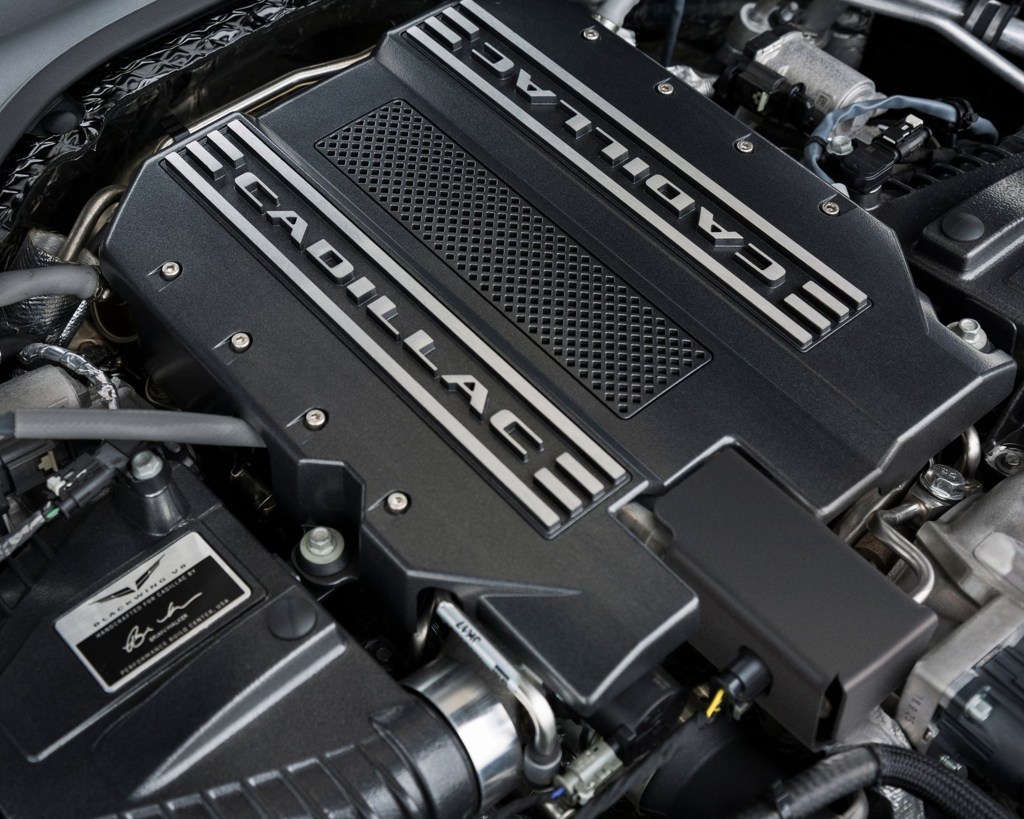
You pick. Big brother CT5-V sports the classic supercharger whine pioneered by the CTS-V, while the new-school CT4-V relies on sophisticated twin-turbos and a compact V6 engine architecture. Both are bound to provide visceral engagement through two distinct formulas of sound and feel.
AKG audio always bumps.
We haven’t had a chance to sit in the CT4-V Blackwing yet, but we’ve had a lot of experience with Harman premium audio systems in the past. Harman’s bespoke systems are fine-tuned by career audiologists in Farmington, Michigan, and the end quality is always amazing. AKG earbuds are some of our favorites, so we’re interested to spin our Detroit playlist in the Blackwing series when they hit the street.
Easter eggs will keep this car fresh for years.
Cadillac designers refer to their iconic intersecting rectangle livery as “the Mondrian pattern”, named after the famed Dutch painter who used stark black lines to divide panels of color. Cadillac’s interpretation can be found throughout the car, from the 3D-printed shift knob trim to the car’s aero-sculpted undertray. Designers teased in the launch video that they hid nods to Cadillac history throughout the vehicle, and owners will likely continue to discover these secret surprises years down the road.
The price.
German supersedans, none of which can be fitted with a manual in the US now, tend to look dated as soon as the newest successor debuts. But the Cadillac CTS-V series has aged more than gracefully, with the final CTS-V wagon still attracting admiration some six years after the end of production. Fast Cadillacs have a staying power that the German brands just don’t, and with a starting price tens of thousands of dollars below the competition, the Blackwing series represents a victory for car culture at large — especially with a standard six-speed manual transmission.
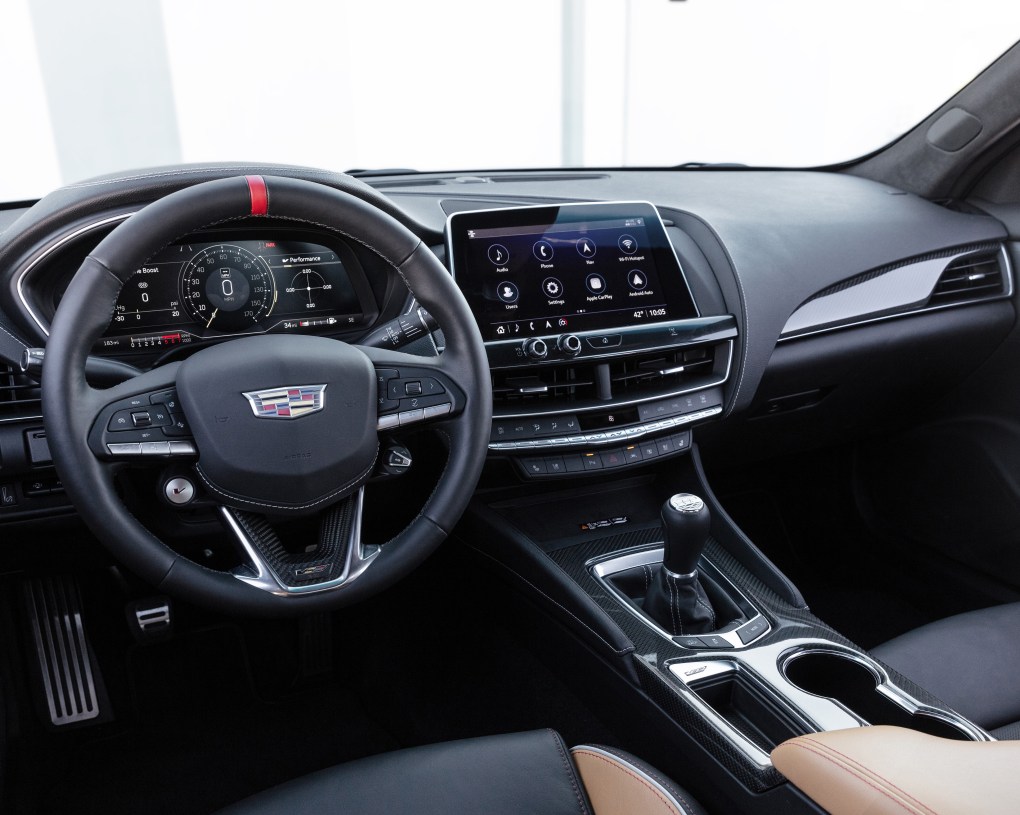
Cadillac surprised the blogosphere in January by revealing that the upcoming race-bred CT5-V can be optioned with a third pedal. Now, the American luxury icon is revealing the rest of the story behind the CT4-V and CT5-V in a livestreamed introduction every manual transmission enthusiast must see.
Building a bona-fide muscle sedan and boldly equipping it with a real manual transmission makes a case for Cadillac’s uniqueness in a market saturated with crossovers pretending to be coupes. Though the brand is fast headed to an all-electric lineup, the V-Series Blackwing models give enthusiasts one last chance to enjoy the command of three pedals.
Sign up for the live reveal with one click by heading to Cadillac’s Twitter post, and show GM that manual transmission enthusiasts will show up when manufacturers show up for us!
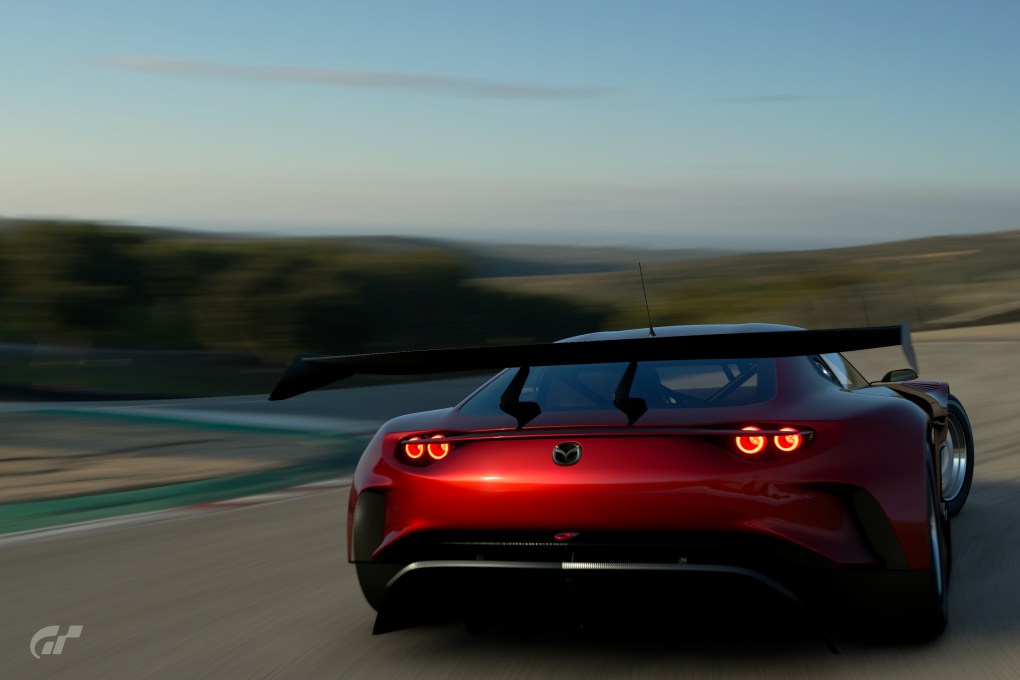
Our friends at GTPlanet have a 20-year history of helping racers get the most out of Gran Turismo. Their latest tip is a five-minute survey from Mazda, where gamers answer questions about their real-life motorsports interests in exchange for some in-game cheddar. The survey is the perfect place to vocalize support for the manual-gearbox Mazdas still offered on these shores, and the virtual cash is enough to buy one example of each roadgoing Mazda in the game.
300,000 Gran Turismo Sport credits won’t quite buy you the sultry RX-VISION GT3 concept in the post header, but you can buy a manual diesel Demio in every color.
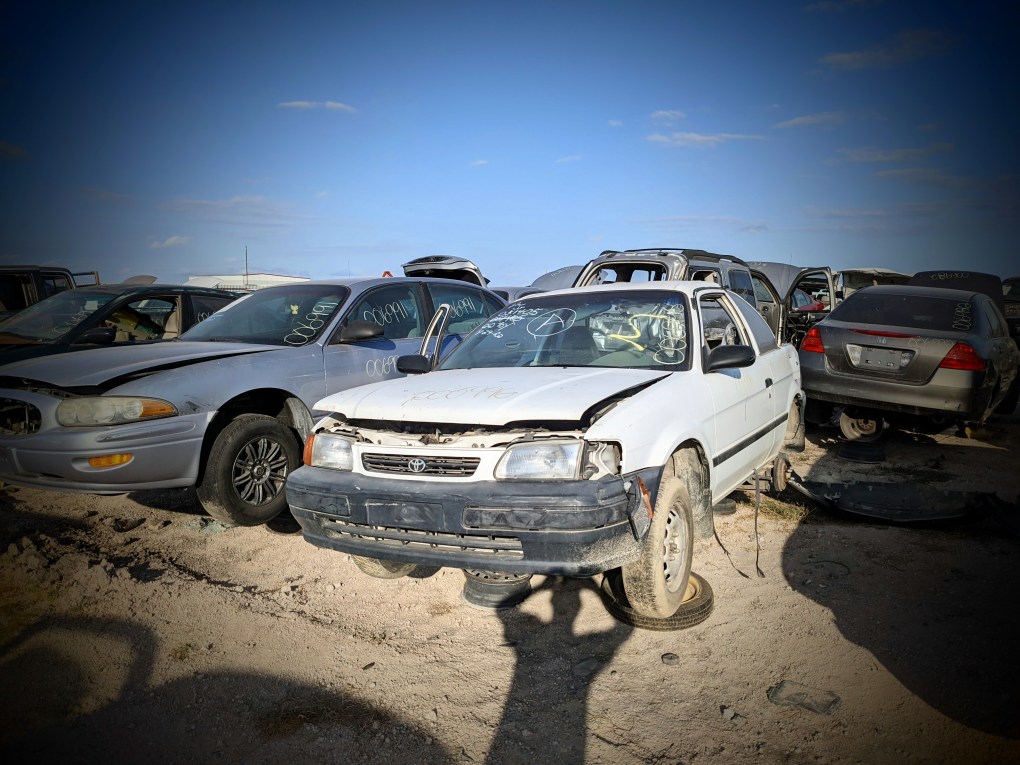
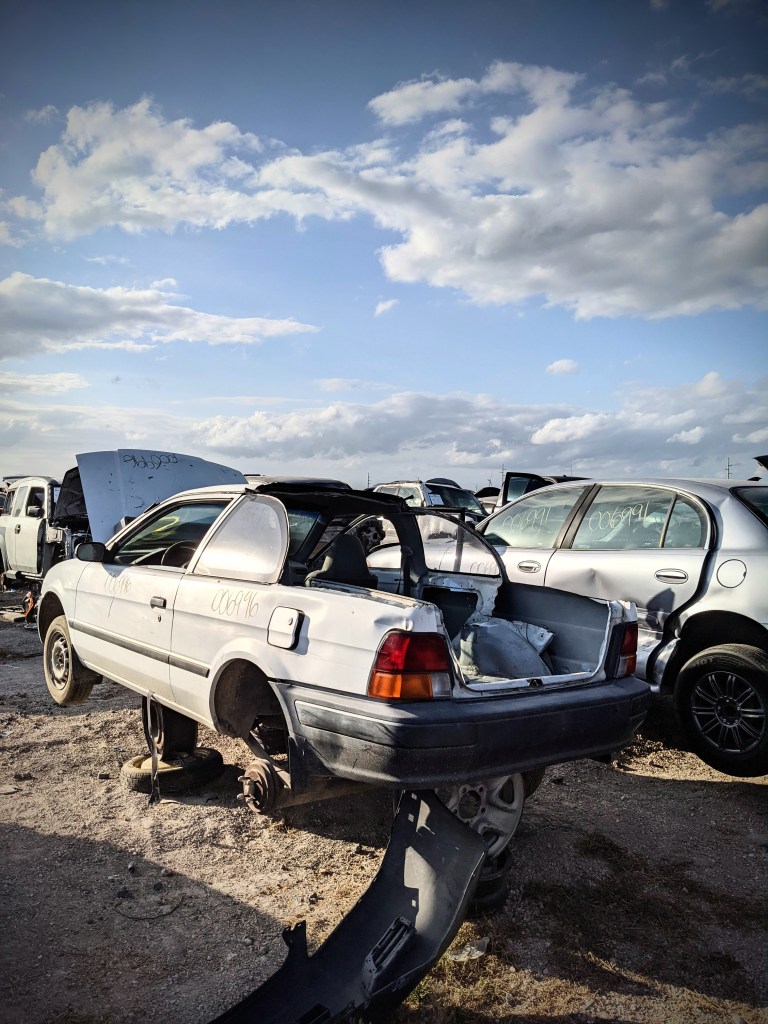
No radio. No wheel covers. No bumper paint. No A/C — a hard sell under the year-round South Texas sun. At just over $10,500, this 1996 Toyota Tercel had no tachometer, either, but it had something no other US-market car offered at any price: a four-speed manual transmission.
The fifth-generation Tercel landed on American shores in 1995. Rounded in front to match the Camry of the day, the sharp, flat-cut rear decklid added a sporty edge to otherwise simple transportation. DX-trim models in period-correct hues of teal and green come to mind, but the base-grade two-door was the only Tercel of the era missing its fifth ratio. Unexpectedly punchy in its class, the 1.5-liter 5E-FE four-cylinder churned out 94 horsepower, put to pavement in the base cars by a C141 four-speed stick.
In 1997, the base Tercel was replaced by a better-equipped CE trim level, thus marking the demise of the last four-speed manual for sale in the United States. Two years later, the Tercel would disappear from America altogether.
With only 143,498 miles on the clock, this tough-as-nails Tercel might seem too young for the crusher — until you walk around back. Is this custom ute conversion the necessity of genius or an affront to what should have been a rolling tribute to the legendary four-on-the-floor? Let us know in the comments.
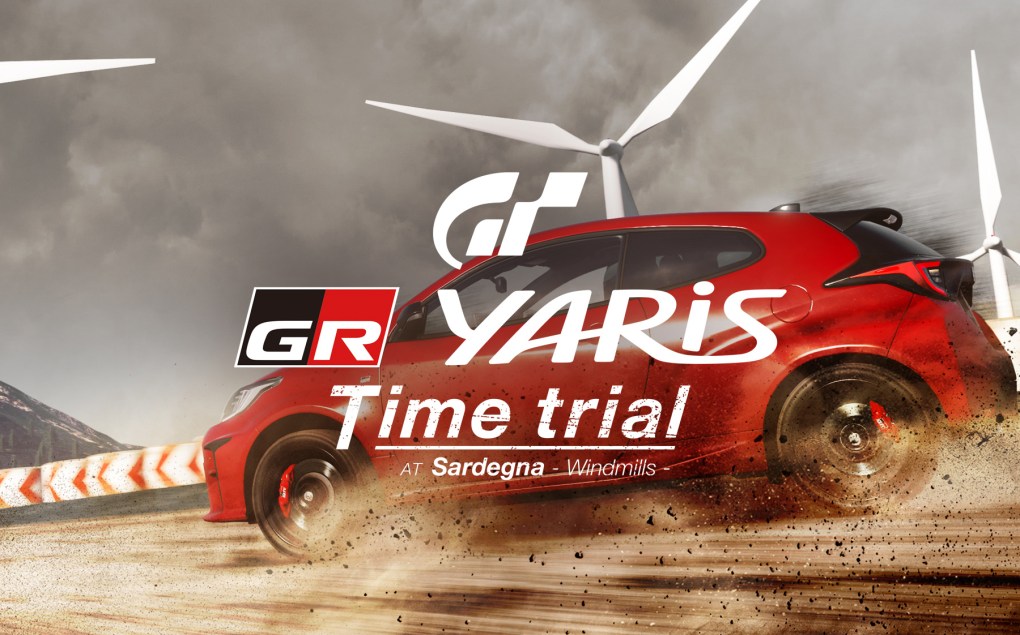
Car critics around the world call the rally-bred Yaris GR “the best Toyota we’ve ever driven” and “a single superlative.” Gran Turismo developer Kazunori Yamauchi, an industry influencer and racecar driver in his own right, offers us what other journalists can’t: a chance to get behind the wheel.
It's been a while since I've seen a car exciting as this. New update coming this week.
Gran Turismo Sport offers a free update tonight at 10 PM PST, introducing the Yaris GR RZ in a dedicated spec race series hosted at the fictional Sardegna windfarm circuit. Expect four production colors: red, black and two shades of white. Keep an eye out for the historic “turbo” logotype on the engine cover, as well as an exquisitely detailed interior with a manual transmission in the center console.
Toyota USA continues to be coy: the official Toyota GR Yaris microsite insists this heralded homologation special isn’t destined for our shores, but implores handraisers to register their interest in an American-market “hot hatch to call its own.” Rumors suggest America’s quick Toyota will be a five-door Corolla equipped with the Yaris GR’s three-cylinder turbo. Translating the Yaris’s exaggerated rear box fenders and pint-sized three-door charm into a larger form-factor will be a difficult challenge, but as long as a manual transmission makes the cut, consider us on board.
“Give me the most French, most manual transmission car you have.”
We skipped any pleasantries. He rose out of his seat.
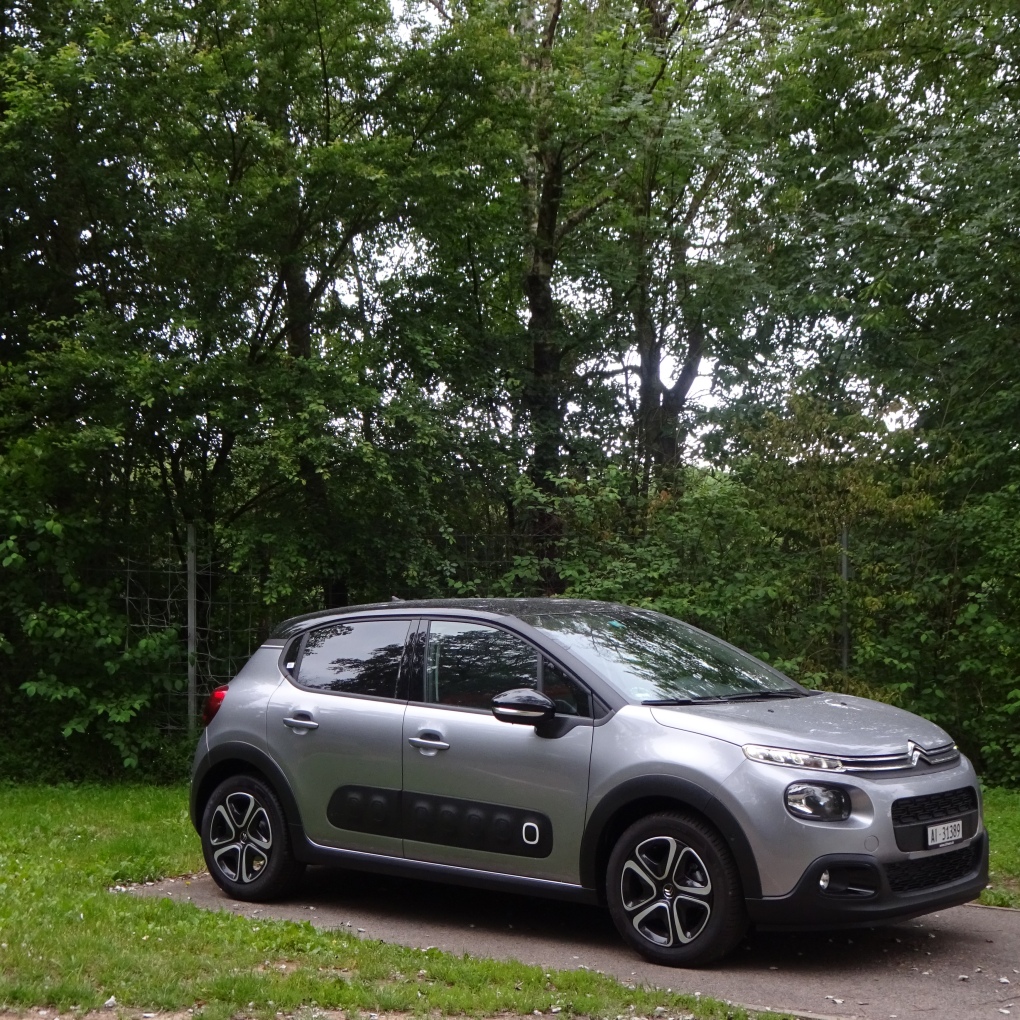
“Citroën C3. It’s hard to find a manual these days, even in Europe. It’s not a manual, but it’s French. It has eight kilometers on it and the Airbump. Don’t test the airbags. Have fun.”
At the Hertz counter in Zurich, I grasped my first set of French keys.
Mustang. Range Rover. Mazda CX-5. Space after space of familiar visage in the garage. I smiled, thinking of how rental car counter agents the world over wield such power with the click of a mouse.
I clicked the fob. I heard a beep. And then I saw a beam.
After steeping for a moment, I popped the door to climb inside. I surveyed the red dash bezel, traced the cloth seat cushion with a finger and inhaled the new car scent. I took my helm and studied the chrome chevrons on the key.
Arrested in my steps, it finally hit me: yes, I’m actually in Europe. I’m actually going to visit Peugeot. And for the next thousand kilometers, this is actually my car.
Into the ignition. A little too much switch torque, and then — a lurch!
Evidently, European safety regulations don’t mandate a clutch pedal interlock to start a car. I glanced downward, and there it was: a palm-filling square knob imprinted with a shift pattern. Hertz Guy was wrong: this C3 was a stick.
Truthfully, any pint-sized high-style compact car from a marque unavailable in the US would have charmed me from the start. But as I settled in by knocking the knob left and right from neutral, every legend about Europe being the mecca of workaday hot hatches proved true.
As I’ve traveled the world to trace the history of cars, I’ve always been struck by the cultural sameness across continents. Behind the wheel of the C3, industry-standard ergonomics made it all the easier to adapt to new traffic signs captioned in a foreign language dotting roads as narrow as they were smooth. Merging onto the motorway, not yet aware of Switzerland’s ubiquitous and vicious speed cameras, the rhythm of gear changes became a familiar bridge to learning both the car and a new set of rules for the road. As it turned out, being genuinely connected to the car through the transmission tamped down the geographic unfamiliarity. It didn’t matter I was in a foreign land and didn’t speak the language. Through a mechanical handshake, I knew I had a partner in this car.
On we went, bravely into the middle lane and soon the left. Immediately, I noticed sharp throttle response at tip-in, all too rare in an era of lazy or efficiency-focused throttle-by-wire calibration. When an engine sharply reacts to your shoe, the satisfaction of a gear change increases all the more. I marveled that Citroën engineers somehow still understood this elemental automotive truth, all but forgotten in the automatic CUVs teeming across the US.
Darting out of tunnels into sharp exits, I noticed that the C3 was still kitted with all the modern active safety conveniences: blind-spot monitoring, lane departure warning and automatic braking debunk the idea that a manual must be analog. The navitainment system offered clear and easy setup, with nothing particularly remarkable or offensive about the touch panel graphic interface. Fonts from the gauge cluster to the head unit were modern, clear and coordinated across the cabin a feat that even the latest Toyotas have yet to achieve. No longer simply avant-garde or whimsical, the C3 exhibits the importance placed upon technology in a modern Citroën modern design brief.
Technology, of course, is hardly a differentiator behind the wheel. Buyers expect seamless Apple CarPlay and Android Auto integration, and for the most part, all OEMs deliver this. Design, too, is an area where most modern OEMs have elevated their craft. The true differentiator in the 2020s is the level of engagement of the drive.
Leaning into the throttle as the highway opened up, this was my epiphany. As automakers shift their R&D resources away from vehicle dynamics to focus on autopilot systems, vehicles built to engage the driver will truly stand apart.
The C3 is a gem.
Its glint comes from the 1.2-liter turbo engine under the hood. Leaning into the throttle at lower RPM, I lamented the lack of turbo whine, but still smiled: somewhere between a growl and a grunt lay the song of the C3, a surprisingly angry bassline echoing a taxed-but-eager inline-six.
The two-hour commute to Peugeot’s Sochaux museum and factory thus became a game: find an empty stretch, scan the road for cops, heel-toe downshift with a giddy giggle and boot out a response from the mad little three-cylinder. You can’t play this game with most American subcompacts. In fact, in modern American nameplate showrooms, you can’t find a subcompact car at all.
Nor is it easy to find a neutral visage on a modern dealer lot. Among a sea of aggressive angry fascias, the C3’s stately neutrality seemed a coy dismissal of its peers. I reversed into a shady parking spot, noted the satisfying actuation and latching of the hatch and took a last look back, lamenting that PSA’s best work would never see our shores. Quelle tragédie.
Months later, a surprise merger with FCA may mean that Peugeot and Citroën platforms have a path to North America after all. Several questions arise: Will a Citroën with a Chrysler badge lose its European appeal? More vital: Will PSA realize that bringing manual transmission models to the United States is a fast path to differentiation in a highly competitive market? As PSA and FCA plan Peugeot’s re-entry into the US, manual transmission fans have one last chance to shape the automotive landscape for those who still care to drive.
“It’s fun having a weird little piece of Japan in the backyard.”
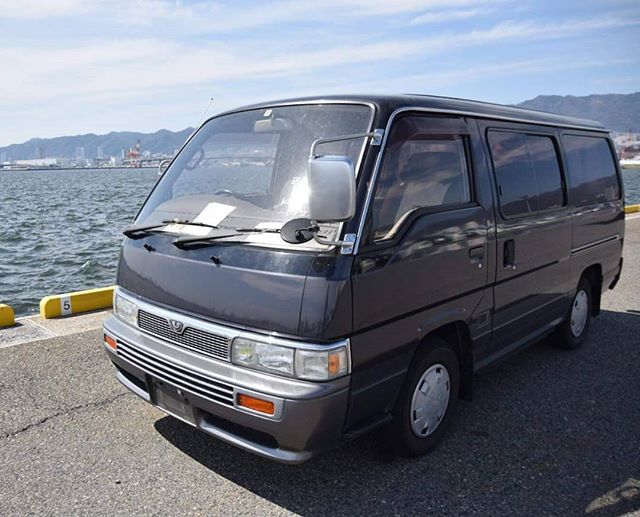
1994 Nissan Caravan Silkroad Andy Peterson, Racine, Wisconsin TMGPS Member since 2018
Gran Turismo may have featured some of Andy Peterson’s favorite cars, but by no means was it the catalyst for his automotive obsession. That passion sparked long before.
“The Nissan fixation goes back to childhood,” said Andy, who also harbors a soft spot for rear-drive Volvos and malaise-era GM products. “One of the first vehicles I really noticed was my aunt’s black 1986 Nissan 200SX hatchback. And, when I was seven, my parents bought an off-lease U11 Stanza, which was so completely different and so much more reliable than the Dodge Aries they traded in on it. It’s the car associated with so many childhood memories.”
After owning a cherry red first-gen Pulsar NX and a near-mint ’91 Maxima which met an untimely demise, Andy began building a new project in his mind: a Japanese-style street van in the mold of idol @dai_san.5555. The #alljapan24family hashtag was the inspiration. The E24-chassis Nissan Caravan would be the base. Suddenly, Houston-based importer J Cars Import had the van in stock.
That quickly, it was his.
“Honestly, shifting from the RHD side is easy and not difficult to get used to,” said Andy, who bought his diesel-powered luxury van sight-unseen. “Keeping the turn signal and wiper blade stalks straight is another matter. “
Champagne cooling in the chiller. Limousine seats reclined next to panoramic windows. Second- and third-row passengers live a cushy life in Andy’s van, lounging in a space somewhere between business-class and bosozoku.
Soon, a set of tasteful wheels will subtly tuck beneath the fenders to complement a lowering kit on order. First on his list of custom touches: a TMGPS shift pattern decal in the center stack that matches the aesthetic so well, people have asked if it’s factory-installed.
“I’ve also had some questions about the hatch decal at tire shops and parts stores,” said Andy, who doesn’t see the manual transmission minivan as a paradox. ” I certainly prefer a manual transmission in other types of vehicles, so why not a van? “
Winter means the stately Nissan will hibernate until the snow is gone. After the thaw, Andy plans to showcase his modern classic at automotive meets from Milwaukee to Madison — and possibly beyond.
“I don’t hold a ton of hope for the continued existence of the manual in new cars,” said Andy, who admits there will always be at least one comfy auto box in his fleet. “But I’d love to be proven wrong. My biggest hope is that driving enthusiasts from my generation will keep manual cars preserved and fiercely treasured as a hobby. Hot rodders and off-roaders have doggedly kept technology like solid axles and carburetors alive in the aftermarket more than 30 years after the major automakers decided they weren’t feasible for production anymore. Hopefully the ’80s, ’90s, and ’00s kids can do the same for the third pedal.”
If you’re an outspoken ally of the manual transmission active in your online owner community, DM @highmileage on Instagram for your chance to be featured in a TMGPS Member Spotlight.







 TMGPS JOURNAL
You must be logged in to post a comment.