
Multiple outlets such as carsdirect.com have reported since April that Hyundai would be offering fewer trims of the Veloster after 2021. A few weeks ago, Hyundai confirmed that all versions of the Veloster would be discontinued except for the track-ready 275-horsepower Veloster N. Although we may not like this change, we can’t argue that it doesn’t make financial sense, since Veloster sales have been in decline for several years. In 2019, Hyundai sold 12,849 Velosters, while only mustering to move 7,581 more in 2020. Both numbers are a sharp decline from the Veloster’s best sales year, when Hyundai sold 38,102 copies of the 2012 model.
Losing the base Veloster is certainly a blow to the manual shifting crowd here at TMGPS. The Veloster offered a manual transmission with every engine and every trim. The base Veloster moves with a six-speed mated to a 2.0-liter naturally aspirated four-cylinder engine producing a respectable 147 horsepower. It won’t win any races, but it reaches highway speeds at a respectable pace. The six-speed Veloster Turbo R-Spec steps up to a 1.6-liter turbocharged GDI four-cylinder producing 201 horsepower. Before the Veloster N was introduced, the Veloster Turbo was the hottest version of the car. This is a sweet spot for most buyers; at $23,450, it’s one of the cheapest ways to get into a 200+ horsepower car. At the top of the range lies the Veloster N, with a six-speed manual transmission mated to a 275-horsepower 2.0 liter turbo GDI four-cylinder. At $32,250, the Veloster N is track-prepped to compete against the likes of the Honda Civic Type R and the Volkswagen Golf R. (To read about the 2022 Honda Civic Type R, click here.)
Due to limited sales in only one trim level, it isn’t a stretch to guess that the Veloster N may be discontinued after 2022. Owners in the TMGPS.org Member Group on Facebook swiftly reacted to the news.
“I own a first-gen Veloster Turbo M/T Tech, and while I’m a bit sad to see the line being discontinued, it also seems like it’s for the best,” said TMGPS.org member Justin Cook, who feels the second-gen Veloster lost some of the first car’s charm. “The first-gen, while falling short of the original concept’s glory, still retained many of the styling cues and much of the unique, quirky spirit of the concept. The quirky uniqueness of the three-door layout — “two on the safe side” as Hyundai billed it — brilliant. The heated seats by Recaro, with heating elements that actually run up the back of the seat, are well above their class, and absolutely outstanding… I bloody love my seats.”
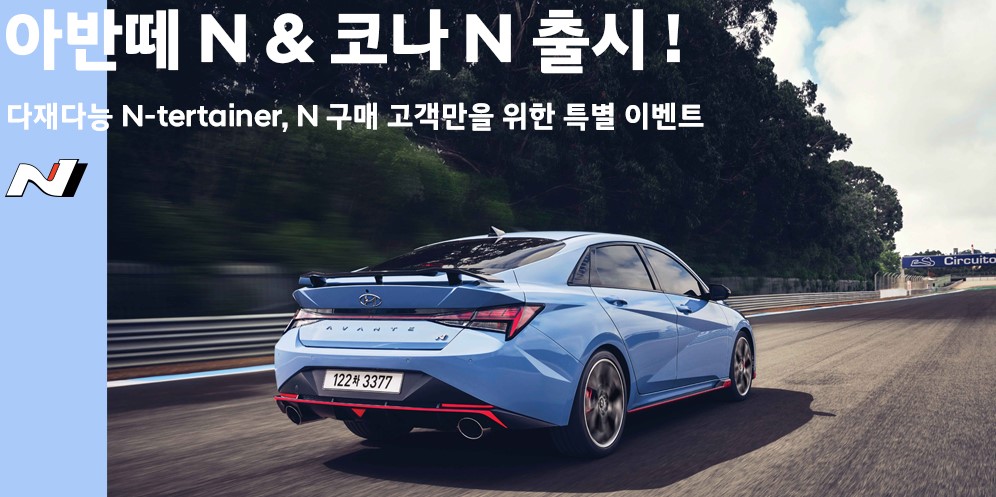
Though the Veloster might disappear into history, for manual-shifting Hyundai fans, the future isn’t all bleak. For several months, Hyundai has teased the Elantra N, which will feature the same six-speed and 275-horsepower turbocharged 2.0 liter engine from the Veloster N. Set to bow in 2022, the Elantra N will be sold alongside the Veloster N for at least that year. While both the Elantra and Veloster look like they could be based on the same chassis, they are in fact distinct: The Elantra has a slightly longer wheelbase, and is 15 inches longer overall. The longer wheelbase might seem like a detriment, but by gaining two full sized rear doors, owners are more likely to haul passengers than with the Veloster’s smaller third door — making it a more practical choice for families and expanding its sales potential.
The 2022 Hyundai Elantra N should start around $35,000, marking a $3000 premium over the Veloster N, but still $4000 cheaper than the Civic Type R and nearly ten grand less than the Golf R.
Miles Wenzel is a manual enthusiast with a love for the great outdoors. Follow #DriveYourCars, a video guide for DIYers who wrench to drive and drive to live.
 TMGPS JOURNAL
One thought on “Ask the Owners: Is the Elantra N Worth Losing the Veloster?”