
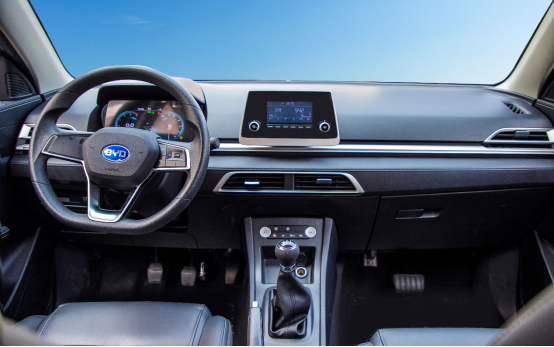
Chinese Automaker BYD has recently developed a simulated manual transmission for electric vehicles specifically for driver training. I had overlooked this news initially, assuming it was no different from the BEV manual concepts we’ve commented on in the past. I failed to recognize that this was the first exclusively electric vehicle to add a manual transmission and that the inputs and feedback from the system are entirely simulated.
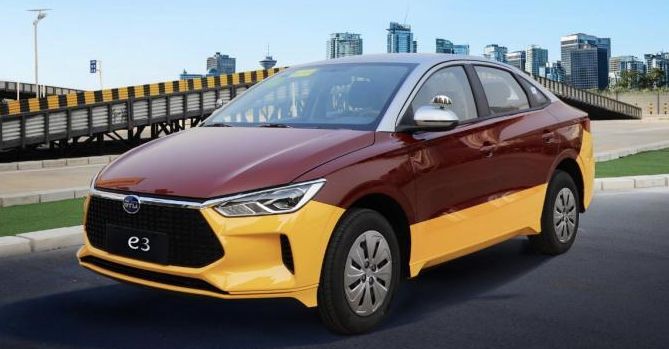
Unlike some of the other examples of manual transmissions in electric cars, where the electric motors output shaft is mated with a conventional clutch and manual gearbox, The BYD E3 clutch and shifter send instructions to the controller which presumably manipulates the speed and torque characteristics of the output in a way which mimics the dynamics of a gear change. I would also expect some sort of feedback in the clutch to simulate the feeling of a bite point. Chery had also developed a similar system for the same purpose with the eQ2, but in this case the vehicle had started as an ICE product that already offered a manual transmission, so the required parts were already existing and integrated.

As China’s massive growth of the middle class matures, its relatively new automotive industry and market are budding rapidly. It’s interesting to observe this from the context of our Western automotive landscape, where we collectively have a lot more direct experience with what some might soon be considered archaic technology. Without several decades of amassed used car inventory to satisfy growing waves of new drivers, the low-cost first-time buyers’ car in China is more likely to be a mini EV than a used Volkswagen. China’s undeniable pollution issues and their government’s ability to control and regulate the marketplace will presumably continue to push things in this direction quite forcefully.
With that backdrop, it is somewhat surprising to learn that there is adequate desire to acquire the skill of driving a manual transmission for two manufacturers to develop and produce simulated manual transmissions on electric cars specifically for the use of driver training. I assume that the primary motivation for acquiring the skill is for occupational purposes. It would be fascinating to find out if there is some level of enthusiasm among new drivers to think about driving more joyfully or recreationally. It’s hard to imagine this technology as a desirable feature outside training or finding its way to our shores. Still, as a driving enthusiast and manual fanatic, I’m glad it exists.
 TMGPS JOURNAL
You must be logged in to post a comment.